



What Is Corporate Digital Signage? Benefits and Use Cases for Modern Workplace
- 5 min read
Workplace communication has changed significantly over the years, but many organizations still rely on methods that struggle to capture attention. Printed notices become outdated, emails are easily overlooked, and important messages often fail to reach every employee.
To improve the visibility and accessibility of workplace communication, many organizations are adopting corporate digital signage. Digital displays make it easier to share announcements, company updates, safety information, and other important messages in high-traffic areas, ensuring information is more visible and easier to update than traditional communication methods.
In this guide, we’ll explain what corporate digital signage is, how it benefits modern workplaces, and the most effective ways businesses are using it today.
What Is Corporate Digital Signage?
Corporate digital signage refers to the use of digital displays in workplaces to communicate information within corporate environments. These solutions replace traditional printed notices and static displays with dynamic digital content that can be updated instantly across one or multiple office locations.
A typical digital signage system includes LED display screens, media players, content management software (CMS), and a network connection. These components work together to help businesses create, schedule, manage, and distribute content from a centralized dashboard, eliminating the need for manual updates on individual screens.
Organizations mostly use digital signage solutions to display a wide range of content, including:
- Company announcements and news
- Employee recognition
- Meeting room schedules
- Corporate events
- Workplace safety reminders
- Business performance dashboards
- Training materials
- Welcome messages for visitors
Digital signage enables organizations to deliver real-time updates that keep employees informed, connected, and engaged. As businesses continue to adopt digital workplace solutions, corporate digital signage has become an essential tool for creating more efficient, collaborative, and modern office environments.
Benefits of Corporate Digital Signage
Below are some key benefits of using digital signage in modern workplaces.
1. Improves Internal Communication
Corporate digital signage provides a simple way for companies to share important information with employees. Since emails and internal messages can often get overlooked, digital screens placed in common areas help ensure key updates are seen by more people.
Businesses can use displays to share announcements, policy updates, event reminders, safety information, and company news. Content can be changed quickly across multiple screens, allowing organizations to keep employees informed with accurate and timely information.
2. Enhances Employee Engagement
Employee engagement is influenced by how connected people feel to their organization, colleagues, and shared goals. Communication displays provide a visible communication channel for recognizing achievements, sharing company updates, and reinforcing workplace culture.
For example, an organization may use office displays to recognize employees who complete major projects, celebrate work anniversaries, or showcase successful team initiatives. These small moments of recognition help create a workplace environment where employees feel informed and appreciated.
3. Creates a Better Workplace Experience
A modern workplace is not just about the office space; it is about creating a positive experience for employees and visitors. Digital signage for businesses helps to create a welcoming and organized environment by delivering useful information at the right place.
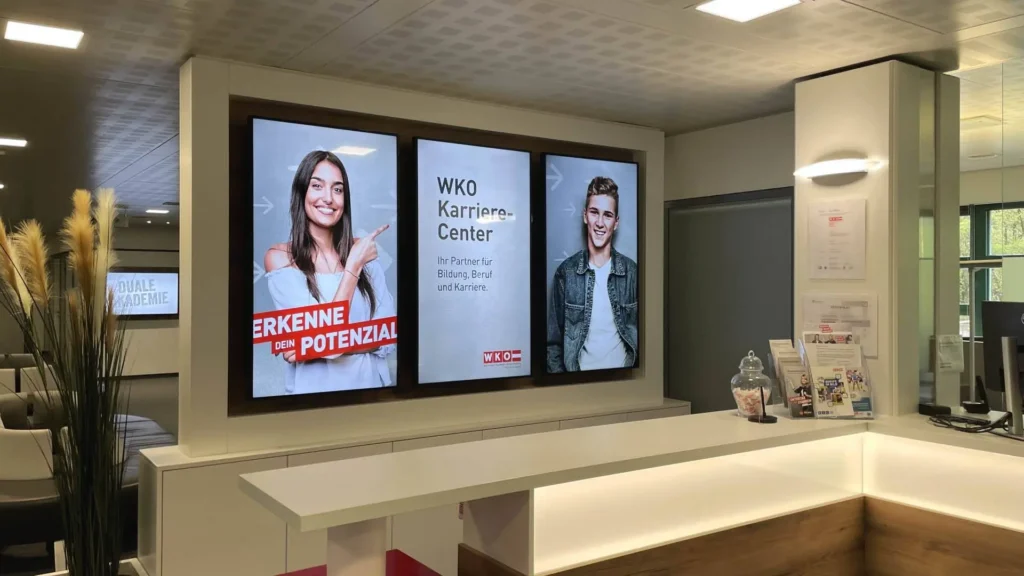
In reception areas, digital displays can greet visitors, provide company information, show directions, or highlight brand messages. In employee areas, screens can provide useful information such as event schedules, workplace updates, or special announcements.
4. Saves Time and Reduces Costs
Managing printed posters, signs, and notice boards requires time, resources, and regular maintenance. Every update may require designing new materials, printing them, and replacing old information.
With digital signage solutions, businesses can update content digitally within minutes. You can reuse screen layouts, schedule content updates, and change messages based on time, location, or audience. This can reduce manual work, minimize costs in the long run, and makes managing workplace communications more efficient.
5. Strengthens Brand Experience
When used effectively, digital signage becomes more than an information display; it becomes a tool for strengthening your brand presence and creating a consistent visual experience.
Businesses can use modern signage solutions in offices, reception areas, and customer-facing spaces to communicate their values, showcase achievements, and highlight company videos, services, success stories, or industry updates.
6. Supports Data-Driven Workplace Communication
Modern corporate digital signage has transformed workplace screens into real-time information hubs. By integrating with business systems such as analytics platforms, performance dashboards, scheduling tools, and operational software, organizations can deliver relevant data directly to employees where decisions and daily activities take place.
Types of Corporate Digital Signage Solutions
Different businesses or workplaces require different signage solutions depending on their communication goals and environment. Here are the most common types of digital signage used in modern workplaces.
1. Standalone Digital Displays
Standalone digital displays are the simplest form of corporate digital signage, consisting of individual screens used for displaying information in specific areas. They are mostly installed in reception areas, hallways, waiting areas, and employee spaces to share relevant content with viewers. They are commonly used to display:
- Company information
- Announcements
- Images
- Videos
- Promotional content
Standalone displays provide a simple alternative to printed posters and notice boards, allowing businesses to update content quickly and keep information fresh without replacing physical materials.
2. Video Walls
Video walls combine multiple screens to create a large visual display. They are often used in corporate offices, headquarters, and customer-facing areas where businesses want to create a strong visual impact. Video walls are commonly used to display:
- Brand videos
- Company achievements
- Live business updates
- Large data dashboards
- Important announcements
3. Interactive Touchscreens
Interactive touchscreen displays allow employees and visitors to engage with content rather than just viewing them. Interactive digital signage improves convenience while creating a more connected workplace experience. These screens can be used for:
- Visitor check-ins
- Employee self-service
- Interactive presentations
- Digital forms
4. Digital Wayfinding Displays
In large corporate offices or multi-story buildings, finding a specific meeting room or department can be difficult. Digital wayfinding displays help employees and visitors navigate spaces more efficiently.
Unlike traditional signs, digital wayfinding content can be updated easily when layouts or room information change, making it a suitable solution for workplaces with frequently changing spaces.
5. Employee Communication Boards
Employee communication boards are a commonly used workplace digital signage, helping organizations share important updates with their workforce. Companies use these displays to communicate internal announcements, HR updates, training schedules, company events, employee recognition, and workplace reminders.
They are especially useful in workplaces where employees do not regularly use computers, such as manufacturing facilities, warehouses, and operational areas.

6. Cloud-Based Digital Signage Platforms
Cloud-based digital signage platforms allow businesses to manage and update multiple screens remotely through a centralized system. Cloud-based systems are ideal for companies with multiple offices or locations, allowing teams to maintain consistent messaging while adapting content for specific regions or departments.
For example, a global company can share a corporate announcement across all offices while still allowing local teams to display location-specific updates.
Corporate Digital Signage Use Cases in Modern Workplaces
The use of corporate digital signage continues to grow as businesses look for better ways to communicate, engage employees, and improve workplace operations. From small offices to global enterprises, digital displays can support many workplace activities.
1. Reception and Lobby Displays
The reception area is often the first point of interaction between visitors and a company. Digital signage in lobbies helps create a professional and welcoming environment.
A well-designed lobby display can provide useful information while creating a positive first impression for customers, partners, and job candidates.
2. Employee Communication Screens
Placing screens in high-traffic areas like elevators, cafeterias, and break rooms ensures that internal news is seen. Employee communication screens help organizations share important updates with their workforce in a simple and visual way.
For example, employees working on factory floors or in warehouses can stay updated through strategically placed digital screens.
3. Meeting Room Digital Signage
Small tablets placed outside meeting rooms can show the room’s schedule in real-time. They can turn red when the room is occupied and green when it is free. Some systems even allow employees to book the room directly from the screen, preventing scheduling conflicts with other teams.

4. Employee Recognition Boards
Use corporate digital signage to highlight the “Employee of the Month,” celebrate work anniversaries, or give “shout-outs” to teams that finished a project ahead of schedule. Statistics show that 60% of employees feel more motivated when their achievements are recognized publicly.
5. Workplace Safety Communication
Safety communication is essential in offices, factories, warehouses, and other work environments. Digital screens can be used to display safety guidelines, workplace alerts, emergency exit routes, and safety reminders to keep employees informed.
6. Executive Dashboards and KPI Displays
Executive dashboards and KPI displays help businesses showcase important metrics such as sales performance, operational updates, and project progress on digital screens. By making key data visible across the workplace, they improve transparency, keep teams aligned, and support better decision-making.
7. Training and Learning Displays
Using screens to share “Tips of the Day” or short training videos. For example, a screen near a new piece of office equipment could show a 30-second video on how to use it. This provides “just-in-time” learning that helps employees improve their skills without attending a formal class.
Best Practices for Corporate Digital Signage Content
Having digital screens in the workplace is only effective when the content is useful, clear, and engaging. Here are some best practices for creating effective corporate digital signage content:
1. Keep Content Short and Easy to Understand
Employees usually view digital displays for only a few seconds while walking through the workplace. Content should be simple, clear, and focused on one main message.
Use:
- Short headlines
- Simple language
- Clear visuals
- Easy-to-read fonts
Avoid adding too much text because crowded screens can reduce attention and make important information difficult to understand.
2. Use Interactive Visual Content
Digital signage works best when it combines text with visuals. Images, videos, animations, and graphics can make workplace communication more engaging.
3. Update Content Regularly
Outdated information reduces the value of digital signage. Businesses should regularly update their screens with fresh and relevant content.
If employees see the same message for three weeks, they will stop looking at the screens. Aim to have at least 30% of your content change every day.
4. Display the Right Content in the Right Location
Different workplace areas have different audiences. Content should be selected based on where the screen is placed.
For example:
- Reception displays can focus on visitors and brand information.
- Employee areas can show internal announcements and recognition.
- Meeting rooms can display schedules and room details.
5. Maintain Brand Consistency
Corporate digital signage should reflect the company’s identity. Using consistent colors, logos, fonts, and messaging helps create a professional appearance and strengthens brand recognition.
Conclusion
Corporate digital signage is more than a replacement for traditional notice boards, it’s a practical communication tool that helps organizations adapt to the demands of today’s workplace. By delivering the right information at the right time, businesses can foster a more informed, connected, and engaging work environment.
As workplace communication continues to evolve, investing in the right digital signage strategy can help organizations communicate more effectively and support long-term business goals.
Frequently Asked Question
1. What is corporate signage?
Corporate signage refers to communication displays used by businesses to share information, promote their brand, guide visitors, and improve workplace communication. It includes traditional signs as well as modern digital signage solutions such as LED screens, interactive displays, video walls, and employee communication boards.
2. What are the 7 key elements of digital signage?
The seven key elements of an effective digital signage system include:
- Display Screen (LED displays, LCD screens, or interactive touchscreens)
- Media Player
- Content Management System (CMS)
- Network Connection
- Content Strategy
- Installation and Placement
- Analytics and Monitoring
3. Why corporate digital signage is so important?
Corporate digital signage helps organizations communicate faster, improve employee engagement, and create a more connected workplace. Unlike printed notices or emails that may be ignored, digital displays placed in high-traffic areas make important information more visible and accessible among employees and visitors.
4. How much does corporate digital signage cost?
The cost of corporate digital signage depends on factors such as screen size, hardware requirements, software features, installation needs, number of displays, and content management requirements. Businesses can choose solutions ranging from simple standalone displays to advanced enterprise-wide digital signage networks.
5. What is the difference between digital signage and corporate digital signage?
Digital signage is a broad term that includes any digital display used to communicate information, advertising, or entertainment. Corporate digital signage specifically focuses on workplace and business communication, such as employee updates, company announcements, visitor information, and operational messages.
Explore Our Other Blogs

Illuminated vs Non-Illuminated Signs: Which Is Best for Your Business?
Your business signage can attract attention or go unnoticed, depending on how..

Effective Retail Signage Design Tips for Maximum Customer Impact
Effective retail signage gets the right message in front of the right..

Shop Front Signs in Perth: Types and Design Ideas for Your Business
A shop front sign is often the first thing a customer notices..

Reusable Exhibition Stands: How to Reuse Your Stand Across Multiple Events
A new exhibition stand for every event can quickly increase your marketing..

8 Signs It’s Time To Update Your Business Signage
Business signage is not a “set and forget” asset. It is often..

10 Cost-Effective Exhibiting Tips to Reduce Exhibition Costs
Exhibitions can generate strong leads and valuable brand exposure, but costs can..
Contact Our Team
Turn your Perth exhibition ideas into unforgettable experiences with Barrett Exhibition Group!
Call us
Call our team to discuss any of our products or services
- 08 9244 2431
Visit us
Chat to us in person at our office
- 18 King Edward Rd, Osborne Park, WA, 6017