



Illuminated vs Non-Illuminated Signs: Which Is Best for Your Business?
- 5 min read
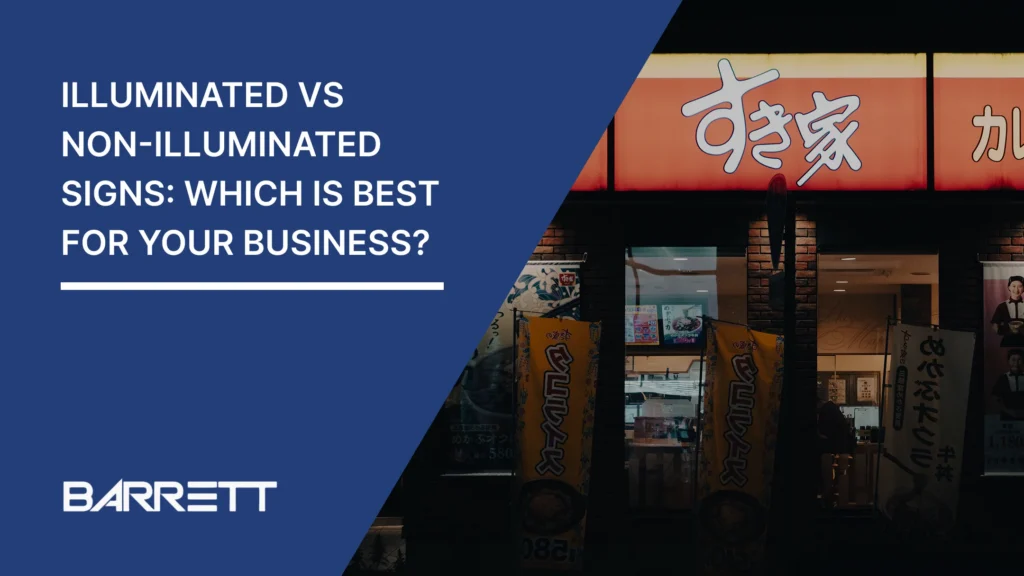
Your business signage can attract attention or go unnoticed, depending on how well it suits its surroundings. But should you invest in illuminated signage, or is a non-illuminated sign enough to make your business stand out? Neither option is best for every business. Choosing the wrong option could mean spending more than necessary or missing opportunities to reach potential customers.
Both options have their advantages, and the right choice depends on your location, visibility needs, budget and business hours. In this guide, we’ll compare illuminated and non-illuminated signs, explore their types, differences and benefits, and help you choose the right signage for your business.
What Are Illuminated Signs?
Illuminated signs include a light source that makes the sign easier to see especially in low light. The light may sit inside the sign, behind its letters or outside it. Most modern illuminated signage uses LED lighting because it is bright, long lasting and energy efficient.
Even though the illuminated signage is visible easily, letter size, contrast, viewing angle and placement still matter: a bright sign with too much text can be hard to read. Shopfronts, office buildings, service stations and shopping centres often use these for better visibility.
What Are Non-Illuminated Signs?
Non-illuminated signs do not feature any lighting system within themselves. They depend upon natural daylight and artificial lights such as street lights and lights from buildings that surround them for visibility. Their effectiveness depends upon color, contrast, size, material, and intelligent placement of signs.
These signs are effective where there is enough natural light or artificial light already present. They can even be used to create a classic look. Using the right material, they can be used both indoors and outdoors without requiring any electrical parts.
Illuminated vs Non-Illuminated Signs: Key Differences
Illuminated and non-illuminated signs serve different purposes, and the right choice depends on your location, budget and visibility needs. Here are the key differences to consider before choosing signage for your business.
Factor | Illuminated Signs | Non-Illuminated Signs |
Visibility | Easier to see in low-light conditions and after dark | Rely on daylight or existing external lighting |
Upfront Cost | Generally higher due to lighting components, electrical work and installation | Generally lower, depending on the materials, size and design |
Running Costs | Use electricity, although energy-efficient LED lighting can keep consumption relatively low | No electricity costs for the sign itself |
Maintenance | May require checks or repairs to LEDs, wiring, power supplies and other lighting components | Usually simpler to maintain, with cleaning, surface care and occasional repairs |
Design and Appearance | Creates visual impact through illumination and can help a business stand out at night | Offers a clean, professional appearance through lettering, graphics, colours and materials |
Best Suited For | Businesses operating after dark, poorly lit locations and signs that need to remain visible at night | Daytime businesses, well-lit premises and locations where additional lighting is unnecessary |
Pros and Cons of Illuminated Signs
Illuminated signage will increase the visibility of a business in the absence of natural light. This is important in the case of hospitality, retail, entertainment, and other businesses which operate in the evening. It may also help customers find an entrance, reception, or driveway in a large and poorly lit area.
Advantages:
- Improved visibility at night and in dark places.
- Greater effectiveness in areas where there are lots of signs competing for attention.
- Modern and luxurious brand image.
- Wide range of design possibilities, such as backlit logos, illuminated letters, and programmable displays.
- LED technology that can provide energy-efficient lighting and long life span if used properly.
Drawbacks:
- Higher upfront costs due to lighting equipment, electrical work, and installation.
- Continuous need for electricity, plus potential for replacement of lighting elements.
- More parts to check and fix compared to plain unlit panels.
- Constraints imposed by planning regulations regarding brightness, placement, hours, or sign types.
Pros and Cons of Non-Illuminated Signs
Non-illuminated signs make a sensible solution when the customer can view the sign during daylight hours or under the current lighting conditions. These do not use any electricity and have no electronic components, which makes their installation easier and reduces costs.
Advantages:
- Lower operating costs due to the fact that the sign doesn’t consume electricity.
- A variety of materials, finishes, and fonts to choose from.
- An elegant design that can work well in professional or historic environments.
- Fewer lighting elements that require maintenance.
Drawbacks:
- Lower visibility at night or in shadowy locations if there is no external lighting.
- High dependence on contrast, location, and light.
- Materials and colors might become faded and weathered depending on the material used.
- The sign may be overlooked amid other visual distractions.
Types of Illuminated signs
Each of the lighting options produces different effects and is suitable for various types of buildings.
LED Signage
LED signage makes use of light emitting diodes as a light source. The LED signage comprises LED letters, LED strips, neon style LED and digital screens. LEDs are powerful, consume less energy compared to the neon and fluorescent tubes and last for years. It is useful for making signs with high visibility but brightness and the content must match the location. The moving or changeable signs require more planning.
Lightbox Signs
A lightbox is a sign containing a light source that illuminates the printed or translucent face. Lightbox produces an even glow across the design and suits shopfronts, directories, reception areas and retail signage displays. The face and internal lighting should be chosen together to make sure the light is evenly distributed. In addition, the graphic face can be easily changed if your branding changes.
Backlit Signs
The backlit signs consist of lighting behind lettering or a sign face. It creates the soft glow around the letters or illuminates the panel from within. The backlighting is useful for logos, corporate foyers and premium architectural building signage where the effect is important rather than the brightness and uniformity of the face.
Front-Lit Signs
Front-lit signs have LED lighting inside each letter or fixtures mounted above or beside it shining forward through an acrylic face. The letters appear bright and sharp from the distance. This type of signs is very popular for building signage and main road shopfronts.
Externally Illuminated Signs
Externally illuminated signs use separate lights aimed at a non-illuminated sign. The light shines on the sign face. This type of signs suits metal panels, heritage buildings and signs that require a classic look. The fixture placement is important as the light should illuminate the sign without any glare and shining into nearby properties.
Types of Non-Illuminated Signs
These are types of non-illuminated signs that are simple, durable and cost-effective.
Flat Panel Signs
The flat panel sign is a rigid panel of aluminium composite, acrylic or metal with printed or applied graphics. It is good for use at building entrances, directional signs and wayfinding. Material selection is based on exposure, size and appearance.
Dimensional Lettering
Dimensional lettering is a type of sign where the letters are in 3D, made out of acrylic, metal or PVC and mounted off the wall. Materials can be used individually or in combination with lighting if visibility at night is required. The daylight will produce shadow lines which make the letters appear 3D. Our general fabrication team makes these in-house.
Vinyl Lettering and Graphics
Vinyl lettering and graphics can be applied to windows, walls, vehicles and sign panels. This is good for logos, hours, wayfinding and promotional graphics. It is fast to produce, affordable and easily updated should you need to change your information. For shopfront windows, take into account the effect of light, reflection and views from the inside.
Printed Business Signs
Printed business signs are digital prints on rigid panels, banners or mesh which can incorporate colour, photographs and other brand graphics. They are good for information panels, temporary promotions and large format printing. Outdoor prints require appropriate inks and substrates for exposure to sunlight and weather.
Acrylic and Metal Signs
The acrylic provides a smooth modern appearance, while metal gives a more durable and architectural appearance. These materials can be used in non-illuminated signs, as well as some acrylic and metal designs being used in illuminated signs. The materials should be chosen based on the conditions and mounting.
When Should You Choose Illuminated Signs
Consider illuminated signs when your business needs to be identified in dimly lit surroundings or from a distance. This would suit you if:
- You operate your business at night time or during early morning hours.
- Your property faces a shaded area or is hard to see from the road.
- Customers need assistance in locating the entrance to your business, the parking space or your business building.
- There are other businesses around your business premises and your sign is competing with others.
- Your business can be highlighted by illuminated signages such as backlit logos and light boxes.
When Should You Choose Non-Illuminated Signs?
A non-illuminated sign may be the better fit when the sign is seen mainly in daylight or in a well-lit interior. Consider it if:
- Your business operates during daytime hours.
- Existing lighting already makes the sign easy to read.
- You want to avoid electrical work or ongoing power use.
- The design calls for a natural, understated or heritage appearance.
- The sign is temporary, promotional or likely to change often.
Factors to Consider When Choosing Signage
- Location and viewing distance: A sign beside a pedestrian entrance has different needs from a pylon sign read by drivers. Consider approach direction, sightlines, traffic speed, nearby trees and competing signs.
- Lighting conditions and hours: Check the site during the times customers will arrive. A sign that looks clear at midday may be hard to read at dusk, in heavy shade or under street glare.
- Message and readability: Keep the main sign message short. Use clear contrast and letter sizes suited to the viewing distance. As legibility is often more important than decorative detail.
- Brand identity and materials: Choose a finish that supports your brand and building. Metal, acrylic, wood, vinyl and printed surfaces offer different looks and weather performance. If your branding or business information has changed, your existing signs may also need updating to reflect those changes.
- Budget and lifespan: Compare the full project, not only the sign face. Include design, fabrication, mounting, electrical work, access equipment, installation, energy use and future maintenance.
- Approvals and installation: Sign rules vary by council, site and sign type. Size, location, illumination, heritage status and digital features may affect approval. For example, the City of Perth’s sign permit information explains that some sign types may be exempt under its policy. Check with the relevant local authority before manufacture or installation.
Common mistakes to avoid
- Choosing on price alone and ignoring night-time visibility.
- Using low contrast colours that fade into the background.
- Placing a sign where trees, awnings or poles block it.
- Skipping approvals until after the sign is made.
Ready to Choose the Right Signage for Your Business
The best sign is the one your customers can read, in the place and conditions where they need it. If visibility after dark is important, an illuminated option may justify its higher upfront cost. If daylight or existing lighting is enough, a non-illuminated sign can deliver a clear result with fewer running costs.
Barrett Exhibition Group designs, manufactures and installs commercial signage from its Perth workshop, with projects delivered across Western Australia and interstate. If you are still unsure, our team can assess your site, lighting conditions and budget, then recommend a practical option. Our in-house team works with a range of materials and sign types to provide best suitable signage as per your need.
Frequently Asked Questions (FAQs)
1. Do Illuminated Signs Use a Lot of Electricity?
No. Modern LED signage uses far less power than older neon or fluorescent signs. Running cost still depends on sign size, brightness and the hours it stays on. Timers and dimmers can reduce it further.
2. Do Illuminated Signs Require More Maintenance?
Yes, slightly. They have extra parts, such as LED modules and power supplies, which may need checking or replacing over time. Non-illuminated signs mainly need cleaning. Regular inspections help catch faults early.
3. Do You Need Council Approval for Illuminated Signs in Australia?
Often, yes. Rules vary by state and council. In Western Australia, many signs need development approval from your local government, and some small signs are exempt. Signs on or near State roads can also need Main Roads WA approval, and many councils limit flashing lights. Electrical work needs a licensed electrician. Check with your council before you order.
4. Is a Non-Illuminated Sign Visible at Night?
Only if there is light on it. Street lights or shopfront lighting can help, but visibility is limited in dim areas. Reflective vinyl or external spotlights can improve night-time visibility.
5. Which Type of Sign Is More Cost-Effective?
Non-illuminated signs cost less upfront and have no power bills. Illuminated signs can be more cost effective for late trading businesses, because they bring in customers after dark. Compare total cost over the sign’s life, not just the purchase price.
Explore Our Other Blogs
Effective Retail Signage Design Tips for Maximum Customer Impact
Effective retail signage gets the right message in front of the right..
Shop Front Signs in Perth: Types and Design Ideas for Your Business
A shop front sign is often the first thing a customer notices..
Reusable Exhibition Stands: How to Reuse Your Stand Across Multiple Events
A new exhibition stand for every event can quickly increase your marketing..
8 Signs It’s Time To Update Your Business Signage
Business signage is not a “set and forget” asset. It is often..

10 Cost-Effective Exhibiting Tips to Reduce Exhibition Costs
Exhibitions can generate strong leads and valuable brand exposure, but costs can..
Modular Exhibition Stands: A Complete Guide for Exhibitors
To have an effective exhibition stand, one must be able to capture..
Contact Our Team
Turn your Perth exhibition ideas into unforgettable experiences with Barrett Exhibition Group!
Call us
Call our team to discuss any of our products or services
- 08 9244 2431
Visit us
Chat to us in person at our office
- 18 King Edward Rd, Osborne Park, WA, 6017