



Custom Exhibition Stands: The Complete Guide for Businesses
- 5 min read
The experience of walking into a crowded trade show floor can be overwhelming. With many companies jostling for attention, you only get seconds to hook the interest of the visitors. This is where having a custom built exhibition stand becomes key, ensuring your company stands out and impresses the visitors.
As businesses increasingly turn to face-to-face marketing, the demand for exhibition displays keeps rising. In fact, as noted by Custom Market Insights, the global modular exhibition stand market is expected to reach $2.4 billion in 2033 up from $1.2 billion in 2024. This shows just how important custom built exhibition stands have become.
If you plan on exhibiting your products for the first time or would like to make some improvements in your exhibition display, this guide provides you with a complete insight into custom exhibition stands including the different types and design, cost of building, and how to choose the best exhibition stand builder.
What Are Custom Exhibition Stands?
Custom exhibition stands refer to personalized stands used in promoting your brand at exhibitions or trade shows. As opposed to normal exhibition stands, they are customized depending on your brand, goals for the exhibition, space available, and intended audience. From the layout and design of the stand to the use of lighting and interactive features, everything can be personalized to ensure that it appeals to potential customers.
Why Are Custom Exhibition Stands Important?
Custom exhibition stands are very useful to any business in helping to build a memorable exhibition presence and meeting marketing and sales objectives.
The Center for Exhibition Industry Research (CEIR) reported that 96% of exhibitors make use of attendee engagement activities to meet various objectives at the exhibition including lead generation, brand awareness, and relationship development. It shows how important it is to have a good exhibition stand design that will encourage visitors to stop, engage and learn about your business.
Some of the benefits of custom exhibition stands are:
- Strengthens Brand Identity: Helps to build a professional and consistent brand identity which will make visitors identify and remember your business.
- Maximises Exhibition Space: Helps to make the best use of your available exhibition space to improve visitor flow and product presentation.
- Showcases Products and Services Effectively: Highlights your products or services through dedicated display and demonstration areas.
- Enhances Visitor Engagement: Encourages visitors to stop, engage and spend some time on the exhibition stand.
- Built Around Your Marketing Goals: Can be built according to marketing goals like lead generation, brand awareness and product launch.
- Long-Term Value and Reusability: Can be modified for use in the future, making it a worthwhile long-term investment.
These benefits help businesses create a stronger exhibition presence and achieve better results.
Types of Custom Exhibition Stands
Custom exhibition stands come in different sizes and designs based on your requirements. Choosing the right type of exhibition stand is influenced by your space, booth location and the experience that you want to create. The common types of custom exhibition stands include:
- Inline Stands: These stands are placed between two neighbouring stands where only one side is open. Inline stands are the best choice for smaller spaces and can be designed with custom branding and other features that increase visitor interaction.
- Corner Stands: These stands are positioned in the corner of two aisles where there is access from two sides. In addition, having two entrances to the stand increases visibility of the stand and provides additional options for product display.
- Peninsula Stands: This type of stands is open from three sides giving the opportunity to interact with many visitors. In addition, peninsula stands increase the space for displaying your products and other purposes.
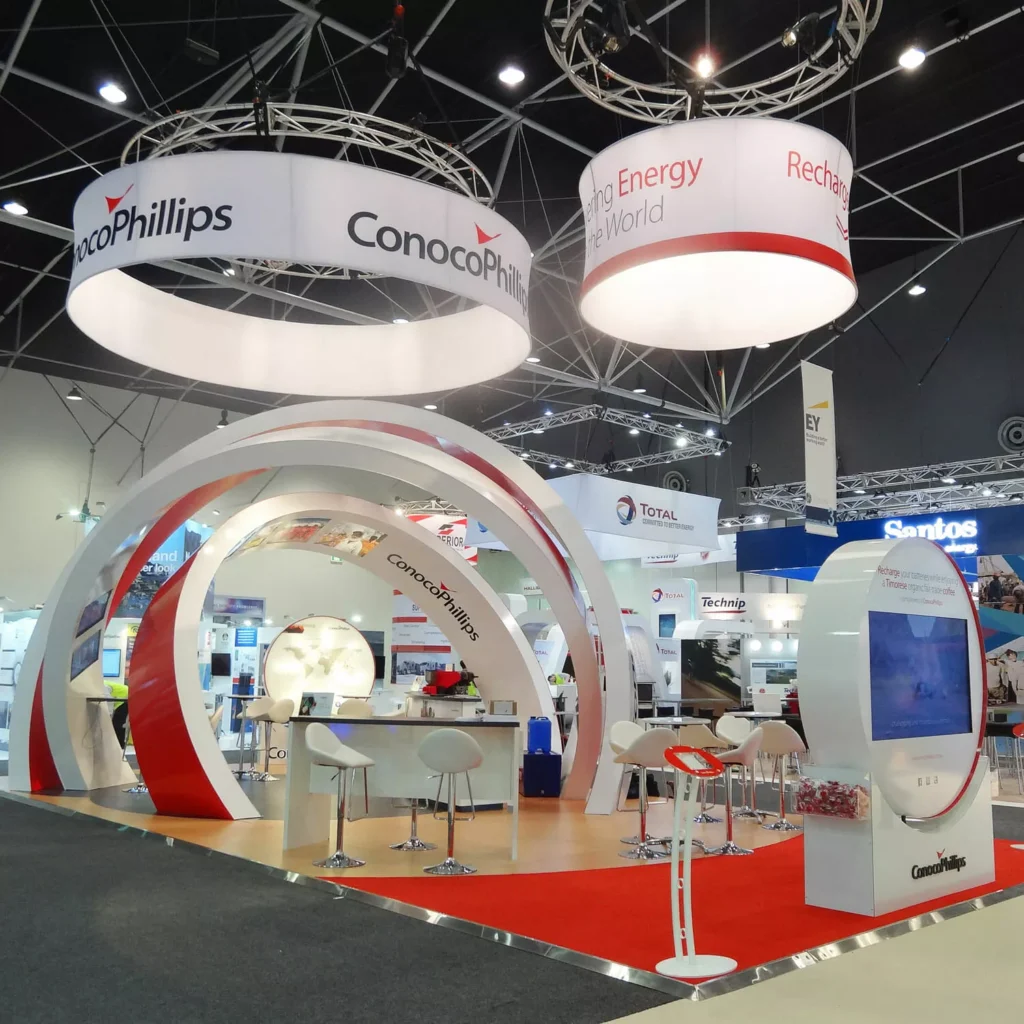
- Island Stands: Island stands surround the aisle and have entrances from four sides making them highly visible and increasing visitor access. This type of stand is suitable for businesses wishing to have a prominent presence on the exhibition and fully customized stand.
- Walk-Through Stands: These stands offer many entry and exit points that encourage visitors to explore them freely and provide a more interactive experience.
- Double-Decker (Mezzanine) Stands: These stands have two floors and are ideal for businesses that need additional space. You can use the upper floor for meetings and the hospitality area and the ground floor for displaying your products.
How Are Custom Exhibition Stands Designed?
Designing a custom exhibition stand involves much more than creating an attractive display. A lot of thought needs to go into how the stand is designed so that it represents your brand and helps meet your exhibition aims. A custom exhibition stand design process usually involves these steps:
- Understanding Your Business Goals: You need to first understand what your business is about, target audience, and what kind of goals you have from the exhibition. This will allow you to design a stand that complements your marketing efforts.
- Site Assessment and Floor Plan Review: Assess the site and review the floorplan in order to get a sense of the size of the exhibition space and the visitor traffic in it. You also need to know the rules and regulations of the venue to avoid any issues when planning.
- Concept Design: Designers will develop a stand concept based on the project requirements and develop 3D visualizations so that you can see what the final exhibition stand will look like.
- Material Selection: Suitable materials, finishes, graphics, lighting, and displays are selected in order to give your stand the right appearance.
- In-house Fabrication: Once the design is approved, your exhibition stand is made and assembled in-house to ensure that all components meet the required specifications.
- Pre-Build Testing: Before the exhibition, the stand is pre-built and checked for any issues so that there are no problems during assembly.
- Installation: The completed stand is transported to the venue and installed on-site, ensuring it is exhibition-ready before the event begins.
Careful planning at every stage helps create a stand that is both functional and visually appealing. Following exhibition stand design tips and not making common exhibition stand design mistakes will allow you to make the most of your exhibition.
Custom Exhibition Stands vs Modular Exhibition Stands
Both custom and modular exhibition stands have their advantages, and the right choice depends on your exhibition goals, budget, branding requirements, and how often you exhibit. While custom stands offer complete design flexibility and a unique brand presence, modular stands provide a practical and reusable solution for businesses looking for versatility.
Feature | Custom Exhibition Stands | Modular Exhibition Stands |
Design | Fully tailored to your brand | Built using reusable modular components |
Flexibility | High | Moderate |
Brand Identity | Unique and personalised | Customisable within a modular framework |
Best For | Businesses wanting maximum impact | Businesses attending multiple events |
Cost | Higher initial investment | More budget-friendly upfront |
Reusability | Can be reused and updated | Designed for repeated use |
The choice ultimately depends on your exhibition objectives and long-term marketing strategy, as both options can deliver excellent results when matched to the right event and business needs.
How Much Do Custom Exhibition Stands Cost?
The cost of a custom exhibition stand depends on factors such as its size, design complexity, materials, features, and installation requirements. While every project is unique, the following estimates provide a general guide for businesses in Australia.
Stand Size | Estimated Cost (AUD) |
Small (3×3m) | $8,000 – $12,000 |
Medium (6×3m) | $12,000 – $18,000 |
Large / Premium | $20,000 – $30,000+ |
The final cost may also vary depending on:
- Stand size and layout
- Custom design and fabrication
- Graphics, lighting, and digital displays
- Furniture and accessories
- Installation, dismantling, and transport
Understanding these cost factors can help you plan your exhibition budget more effectively.
How to Choose the Right Stand Builder
Choosing the right exhibition stand builder is crucial for the successful organization of your event. A competent builder should be able to fully understand your needs, provide professional assistance and build a stand that will perfectly satisfy all your requirements during the exhibition process.
When evaluating exhibition stand builders, consider the following factors:
- Define Your Exhibition Goals and Needs: It will be helpful to know what your goal of the exhibition is, whether it is to collect leads, present your product or increase your brand’s visibility. It will make your choice of the stand design and a builder much easier.
- Evaluate Experience and Proven Expertise: Choose a company with experience in the construction of various exhibition stands, especially in the sphere similar to yours. It will enable you to avoid mistakes and get positive results from your exhibition.
- Assess Creativity and Design Capability: Consider their approach to design development to find out if the builder can develop a unique design for your stand and whether it will be effective in practice.
- Full-Service vs. Build-Only Options: There are some builders who manage all aspects of the process – from the stand design and development to the installation and disassembling of it, while others just build the stand. You can choose according to your preferences.
- Review Portfolios and Client Feedback: Understanding more about the quality of the builder’s work, his reliability and attention to details by looking at their previous projects and client testimonials.
- Consider Practical Logistics, Budget, and ROI: Pay attention to practical issues like cost, the price of the building process included in the quotation and its return on investment (ROI). It is also important to consider the long-term value and return on investment rather than focusing only on the initial cost.
- Communication and Collaboration: A good exhibition stand builder should communicate clearly, respond promptly, and keep you informed throughout the project to ensure everything runs smoothly.
Conclusion
A custom exhibition stand is more than just a display, it’s an opportunity to showcase your brand, attract the right audience, and create meaningful connections at trade shows and exhibitions. Understanding the different stand types, design process, costs, and planning considerations can help you make informed decisions and maximise the value of your exhibition investment.
If you’re ready to bring your exhibition ideas to life, Barrett Exhibition Group provides end-to-end custom exhibition stand solutions, from design and fabrication to installation, tailored to your brand, objectives, and exhibition requirements.
Frequently Asked Question
1. Who Are Custom Exhibition Stands Best For?
Custom exhibition stands are suitable for businesses of all sizes that want to create a strong brand presence at trade shows, exhibitions, conferences, and industry events. They are particularly beneficial for companies launching new products, promoting services, or looking to attract more visitors and generate quality leads.
2. What features can be included in a custom exhibition stand?
A custom exhibition stand can include:
- Branded graphics
- Product display areas
- Meeting spaces
- Storage
- LED screens
- Interactive displays
- Lighting
- AV equipment
- Furniture
The features can be tailored to suit your exhibition objectives and available space.
3. How far in advance should I start planning a custom exhibition stand?
It’s recommended to start planning at least 3 to 6 months before your exhibition. This provides enough time for consultation, design, approvals, fabrication, logistics, and installation while allowing flexibility for any design changes.
4. What information should I provide before designing a custom exhibition stand?
To create a stand that meets your objectives, you should provide details such as your exhibition goals, stand size, budget, branding guidelines, products or services to be displayed, target audience, and any specific features or functionality you require.
5. Can a custom exhibition stand be updated for future events?
Yes. Many custom exhibition stands can be updated with new graphics, branding, layouts, or additional features to suit different exhibitions or marketing campaigns. This allows businesses to refresh their stand without designing an entirely new one for every event.
Explore Our Other Blogs

Illuminated vs Non-Illuminated Signs: Which Is Best for Your Business?
Your business signage can attract attention or go unnoticed, depending on how..
Effective Retail Signage Design Tips for Maximum Customer Impact
Effective retail signage gets the right message in front of the right..
Shop Front Signs in Perth: Types and Design Ideas for Your Business
A shop front sign is often the first thing a customer notices..
Reusable Exhibition Stands: How to Reuse Your Stand Across Multiple Events
A new exhibition stand for every event can quickly increase your marketing..

8 Signs It’s Time To Update Your Business Signage
Business signage is not a “set and forget” asset. It is often..

10 Cost-Effective Exhibiting Tips to Reduce Exhibition Costs
Exhibitions can generate strong leads and valuable brand exposure, but costs can..
Contact Our Team
Turn your Perth exhibition ideas into unforgettable experiences with Barrett Exhibition Group!
Call us
Call our team to discuss any of our products or services
- 08 9244 2431
Visit us
Chat to us in person at our office
- 18 King Edward Rd, Osborne Park, WA, 6017