



Exhibition Stand Transport, Storage and Logistics: A Practical Guide
- 5 min read
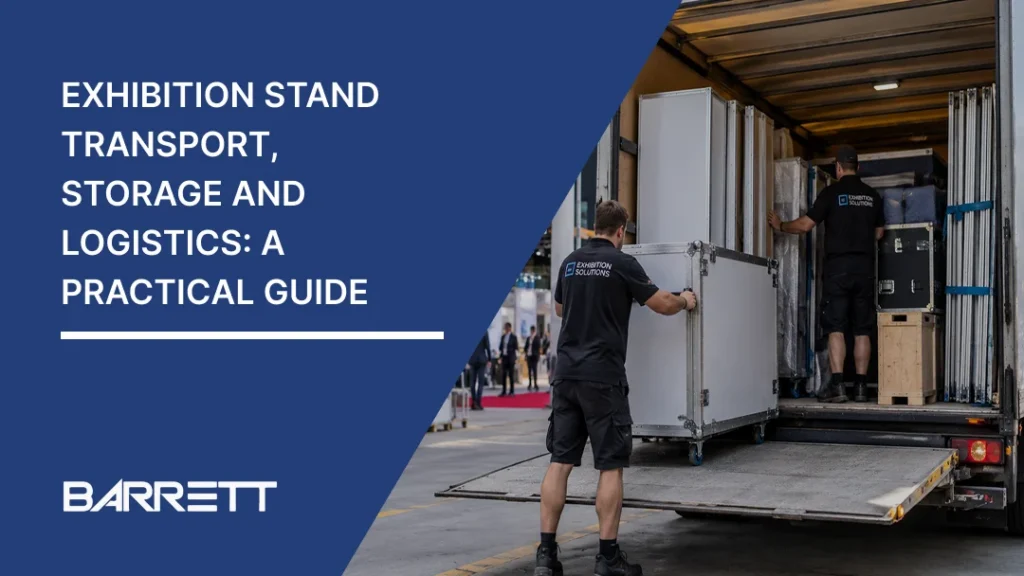
Getting an exhibition stand to the venue is only one part of the job. You also need to pack it safely, meet delivery rules, coordinate bump-in, arrange return freight, and protect reusable components between events.
Since, exhibition logistics covers the movement and handling of stand components before, during, and after an event. A clear plan helps avoid missing parts, damaged graphics, extra handling fees, and last-minute stress. This guide explains how to manage exhibition stand transport and storage in practical steps.
How to Plan Exhibition Stand Transport and Logistics
Good transport planning links four things: venue rules, transport method, schedule and budget. Start planning as soon as you have the event dates, venue, and stand design. Freight planning should not wait until the build is complete. Case sizes, loading needs, and delivery timing can affect the design and budget.
Confirm the Exhibition Venue and Delivery Requirements
Read the event’s exhibitor manual and confirm the details with the organiser or venue.
- Loading dock access, vehicle height limits and unloading zones
- Delivery windows and bump-in times
- Label and consignment format
- Whether an official contractor must move freight inside the hall
- Advance warehouse deadlines and storage terms
Freight that arrives early, late or badly labelled can be refused or charged extra.
Choose the Right Transport Method
The right method depends on size, distance, budget and time. Most domestic stands travel by road.
Method | Best for | Trade-off |
Road freight | Most domestic stands and heavy loads | Slower on long routes |
Air freight | Urgent graphics and small parts | Highest cost |
Sea freight | Large international shipments | Longest lead time |
Dedicated truck | Fragile or oversized custom stands | Higher cost than shared freight |
Perth is far from the eastern capitals, so interstate freight takes longer and costs more. A local build, hire option, or local storage may be more practical than repeatedly moving a large stand across the country.
Schedule Freight Collection and Delivery
Work backwards from the venue’s delivery deadline.
- 8 to 12 weeks out: confirm venue rules and request quotes
- 4 to 6 weeks out: book freight and order crates
- 2 weeks out: finish inventory, labels and documents
- 3 to 5 days out: collect freight or meet the warehouse deadline
- Bump-in day: deliver inside your window
Assign Responsibilities and Confirm Costs
Write down who is responsible for each handover. This may include the exhibitor, stand builder, freight carrier, venue contractor, and installation crew. Confirm who books dock access, receives freight, reports damage, supervises on-site handling, and authorises return transport. Get a written quote covering collection, delivery, handling, return freight and freight insurance.
For international shipments, ask about customs clearance and temporary import documents such as an ATA Carnet, which lets goods enter a country duty free if they are re-exported.
How to Pack and Prepare an Exhibition Stand for Transport
Most stand damage happens during handling, not driving, so good packing protects stand components and also makes the next installation easier.
Disassemble the Stand and Protect Its Components
Take the stand apart in reverse build order and photograph each part before it goes into a case. These photos support any damage claim.
- Remove graphics, lighting equipment and screens first
- Disconnect electrical components, then coil and label cables
- Dismantle modular frames, display panels and counters
- Bag all hardware by section
- Keep the build plan with the freight so installers can rebuild quickly
Choose Suitable Packaging and Protective Materials
Component | Best protection |
Tubes, or flat in padded cases with protective film | |
Frames and display panels | Foam corners, edge guards, stacked flat |
Lighting and screens | Foam-fitted flight cases or original boxes |
Display counters | Blankets, stretch wrap or custom crates |
Electrical components | Anti-static bags and labelled cable pouches |
Pack heavy items at the bottom, fill gaps and strap pallets firmly. Good load security stops movement, the main cause of scratches and cracks. Reusable crates cost more upfront but protect your stand for many shows.
Label Packages and Create an Inventory
Label every package on at least two sides with the exhibitor name, stand number, show, venue and a case count such as 3 of 12. Build an inventory checklist listing every case and its contents, and keep one printed copy inside the freight and one digital copy. Barcodes or QR labels speed up component tracking at both ends.
Prepare Oversized or Fragile Components
Tell the carrier about oversized, heavy, or fragile items before booking. Confirm whether a tail lift, pallet jack, special vehicle, or venue lifting equipment is needed. Check that the item can pass through loading doors, service lifts, and access routes. If it cannot, discuss a different packing design or local fabrication option before the event.
Exhibition Stand Delivery, Bump-In and Installation
Bump-in is the scheduled period when exhibitors and crews bring materials into the venue and build their stands. Good coordination matters because many exhibitors share the same docks, lifts, and floor space.
Coordinate Delivery with Venue Access Times
Book your dock slot and share driver details with the venue. Arrive early in your window, because queues build fast during bump-in. The organiser or venue may control the loading dock and material handling. Confirm which tasks your own crew can do and which require an appointed contractor. This avoids a dispute or delay when the vehicle arrives. Rules differ by venue, so follow the exhibition stand regulations.
Check the Stand on Arrival
Before signing for freight, inspect the visible cases for damage or tampering. Record problems on the delivery paperwork and take clear photos. Then compare the case count with the inventory. Open priority cases early enough to replace or repair essential items before the show opens.
If an item is missing or damaged, contact the carrier and the event logistics contact promptly. Keep packaging and documents, and follow the carrier’s claim process. Do not assume a claim will be accepted without timely evidence.
Coordinate Transport with Stand Installation
The delivery plan should match the installation plan. The crew needs to know which cases contain the first-use parts, where each case should be placed, and what equipment is required. Keep access routes clear, follow venue safety rules, and store empty cases only in the approved area.
Our exhibition and display service includes delivery coordination and on-site installation. Clear communication between the project team, carrier, and venue helps the stand become ready before opening.
Exhibition Stand Dismantling and Return Transport
Return freight is easiest to manage when it is booked before the event. Confirm the venue’s final collection deadline, vehicle access, paperwork, and where packed cases must wait.
Plan Bump-Out Before the Exhibition Ends
Confirm when visitors must leave, when dismantling can start, and when freight must be ready. Assign a person to supervise the pack-down and verify all components against the inventory.
Do not dismantle early if event rules prohibit it. Early pack-down can affect visitor safety and may breach the organiser’s requirements.
Pack Components for Safe Return
Use the original case layout where possible. Check components for wear, clean surfaces, and separate damaged parts so they do not harm other items. Note missing parts and repair needs in the inventory. Take photos of the packed cases and attach return labels before they leave the stand area.
Confirm collection and dispatch
Confirm the carrier’s collection time and the person who will release the shipment. Keep the consignment receipt and tracking details. If the stand is moving to another event rather than a warehouse, ensure the next venue has accepted the delivery plan and labels.
How to Store an Exhibition Stand Between Events
Exhibition stand storage lets you reuse a stand for years and protects the value of reusable frames, display panels, graphics, lighting, and furniture. Using reusable exhibition stands also helps to lower the cost per event.
Clean and Inspect the Stand Before Storage
Remove dust and marks using materials suitable for each surface. Allow wet or cleaned parts to dry before packing. Inspect frames, connectors, printed panels, lighting, and cables. Record repairs and replace damaged parts before the next event, not during bump-in.
Choose Suitable Exhibition Stand Storage
Option | Best for | Watch out for |
Own storeroom | Small portable displays | Limited space |
Stand builder | Access times and insurance | |
Third-party warehouse | Large stands, long gaps | Climate and access rules |
Venue storage | Short gaps between shows | Time limits and fees |
Ideal storage conditions are dry, clean and stable in temperature. Keep components off the floor and out of direct sunlight, because moisture and heat damage graphics and electronics.
Organise Components for Easy Retrieval
Store cases by stand, layout, or event kit. Keep an up-to-date inventory that records each case location, contents, condition, and maintenance needs. A photograph of the packed case layout and a simple assembly plan can save time when a different crew handles the next event.
Prepare the Stand for Its Next Exhibition
Before dispatch, check the next stand plan against the stored inventory. Confirm that graphics, lighting, furniture, and electrical parts suit the new layout. Order replacement pieces early. For frequent exhibitors, a reusable modular stand can help manage different spaces with a shared set of components.
Factors Affecting Exhibition Stand Transport and Storage Cost?
There is no single exhibition freight rate. Costs depend mainly on size, weight, distance, timing, handling and storage length.
Factors That Affect Transport Costs
Factor | Why it matters | How to reduce it |
Weight and volume | Carriers charge on actual or cubic weight, whichever is higher | Pack tightly, use modular designs |
Distance | Longer routes cost more | Build or hire locally for distant shows |
Urgency | Express and air freight carry a premium | Book early |
Handling and venue fees | Forklifts and late delivery add charges | Follow delivery windows |
Insurance | Premiums rise with declared value | Declare accurate values and compare cover |
Factors That Affect Storage Costs
Storage pricing usually reflects:
- Space used, by pallet or square metre
- Length of storage
- Handling in and out
- Climate control and security
- Insurance and inventory management
Compare storing a stand with reshipping or rebuilding it. For reusable stands, storage is often cheaper.
How Professional Exhibition Logistics Support a Successful Event
Successful exhibition logistics come down to careful planning, reliable coordination and proper handling at every stage, from transporting your stand to the venue to dismantling and storing it after the event. By organising freight, confirming delivery schedules and keeping track of every component, you can minimise delays, avoid unnecessary costs and keep your stand ready for future exhibitions.
Barrett Exhibition Group is a family-owned Perth business that has been helping businesses bring their exhibition ideas to life since 1955. Our in-house team manages the process from design and construction through to shipping, installation and storage. Whether you need a custom exhibition stand or support with your next exhibition project, planning the logistics early helps ensure everything arrives ready for the event.
Frequently Asked Questions (FAQs)
1. Can exhibition stands be shipped internationally?
Yes. Stands can travel by air or sea. International shipments need a commercial invoice, a packing list and often temporary import paperwork such as an ATA Carnet. Start three to four months ahead and use a provider that handles customs clearance.
2. Can exhibition stand components be shipped directly to an exhibition venue?
Yes, if the venue and organiser allow it. Most set delivery windows and labelling rules, and some require freight to go to an advance warehouse first. Check the exhibitor manual and confirm in writing.
3. Is it cheaper to transport an exhibition stand or hire one locally?
It depends. For a stand you will reuse often, transport and storage usually cost less per event. For a one-off interstate show, local hire can remove freight, handling and return costs. Compare total cost, not just the stand price.
4. What should you do if an exhibition stand arrives damaged?
Note the damage on the delivery docket before signing, photograph everything and tell the carrier the same day. Keep invoices and packing lists, then lodge an insurance claim and arrange repairs before bump-in ends.
Explore Our Other Blogs

Custom Exhibition Displays: A Complete Guide for Exhibitors
Your exhibition display is the very first thing that people will notice..

Illuminated vs Non-Illuminated Signs: Which Is Best for Your Business?
Your business signage can attract attention or go unnoticed, depending on how..
Effective Retail Signage Design Tips for Maximum Customer Impact
Effective retail signage gets the right message in front of the right..

Shop Front Signs in Perth: Types and Design Ideas for Your Business
A shop front sign is often the first thing a customer notices..
Reusable Exhibition Stands: How to Reuse Your Stand Across Multiple Events
A new exhibition stand for every event can quickly increase your marketing..

8 Signs It’s Time To Update Your Business Signage
Business signage is not a “set and forget” asset. It is often..
Contact Our Team
Turn your Perth exhibition ideas into unforgettable experiences with Barrett Exhibition Group!
Call us
Call our team to discuss any of our products or services
- 08 9244 2431
Visit us
Chat to us in person at our office
- 18 King Edward Rd, Osborne Park, WA, 6017