



Proven Exhibition Stand Design Tips Every Exhibitor Should Know
- 5 min read
Creating a successful exhibition stand design is not just about building something that looks attractive. It is about attracting the right visitors, starting meaningful conversations, and turning foot traffic into real business opportunities. At trade shows and exhibitions, your stand is often the first interaction people have with your brand.
Whether you are preparing for a major trade show in Perth, Sydney, or Brisbane, or planning a smaller local expo stand design, the principles of effective exhibition stand design remain the same.
At Barrett Exhibition Group, with over 65 years of experience in crafting bespoke exhibition solutions in Perth, we understand what it takes to create stands that truly stand out in competitive environments. This guide explores proven exhibition stand design tips to help ensure your next event is both memorable and successful.
1. Define Your Objectives Before Stand Design
Before you start thinking about colours, layouts, or materials for your stand, you need clear objectives. A strong exhibition booth design always starts with business goals.
Ask yourself:
- Are you aiming to generate leads?
- Do you want to launch a new product?
- Is your goal brand awareness?
- Are you trying to build partnerships?
Your objectives will shape every design decision, influencing everything from your stand’s layout to the interactive elements you incorporate. For example, a lead generation stand may need a more open layout with meeting areas, while a product-focused stand may need demo stations and display zones.
Many successful exhibitors working with experienced builders like Barrett Exhibition begin their project with a strategy session. This helps ensure the design of an exhibition stand process is aligned with measurable results, not just visual appeal. Also, a clear objective helps you avoid unnecessary costs and keeps your messaging focused.
2. Create a Stand Layout That Maximizes Visitor Flow
One of the most overlooked parts of exhibition stand design is visitor movement. A well-planned layout ensures a smooth flow of traffic and can significantly increase engagement at any trade show or exhibition. When planning layouts, it is also important to consider different types of exhibition stands, as each type influences how visitors interact with the space.
In Australia, major venues like the Perth Convention and Exhibition Centre (PCEC) often host massive events with thousands of attendees. In such environments, your stand should be designed with open, accessible layouts. Some of the things you should keep in mind:
- Keep Entry Points Open and Inviting: Ensure your stand has clear, easy-to-access entrances. Avoid placing large furniture or walls at the front. Instead, design a welcoming front. At Barrett Exhibition Group, we often suggest “island” or “corner” layouts, as these provide multiple entry points and improve visibility from different angles.
- Design Clear Navigation Paths: Once visitors enter your stand, they should know where to go next. Confusing layouts can cause people to leave quickly. A good exhibition booth design often includes:
- A clear front welcome area
- A product or service display zone
- A conversation or meeting space
- Allocate Dedicated Spaces for Engagement: High-performing exhibition display stands always include areas designed for interaction. This could include:
- The “Hook” Zone: A high-traffic area at the front to attract attention
- The “Education” Zone: Space for demos and explanations.
- The “Conversion” Zone: Comfortable area for deeper conversations and closing discussions.
3. Use Strong Branding Elements
Your stand should communicate your brand instantly. In a busy trade show environment, you have only a few seconds to capture attention. Strong, consistent branding is essential to make your stand memorable and instantly recognisable.
Your stand design should utilize your brand’s official colours, logos, and typography. This is especially important for custom exhibition stands, where brand identity can be fully integrated into the structure. Avoid cluttered designs or too many competing colours. Simplicity often works better in large exhibition halls.
Also, your messaging should be concise, compelling, and clearly communicate your value proposition. Focus on a strong headline message and clear value proposition instead of long sentences. This clarity is especially important in expos, where visitors are moving quickly between booths.
4. Optimize Lighting for Better Visibility
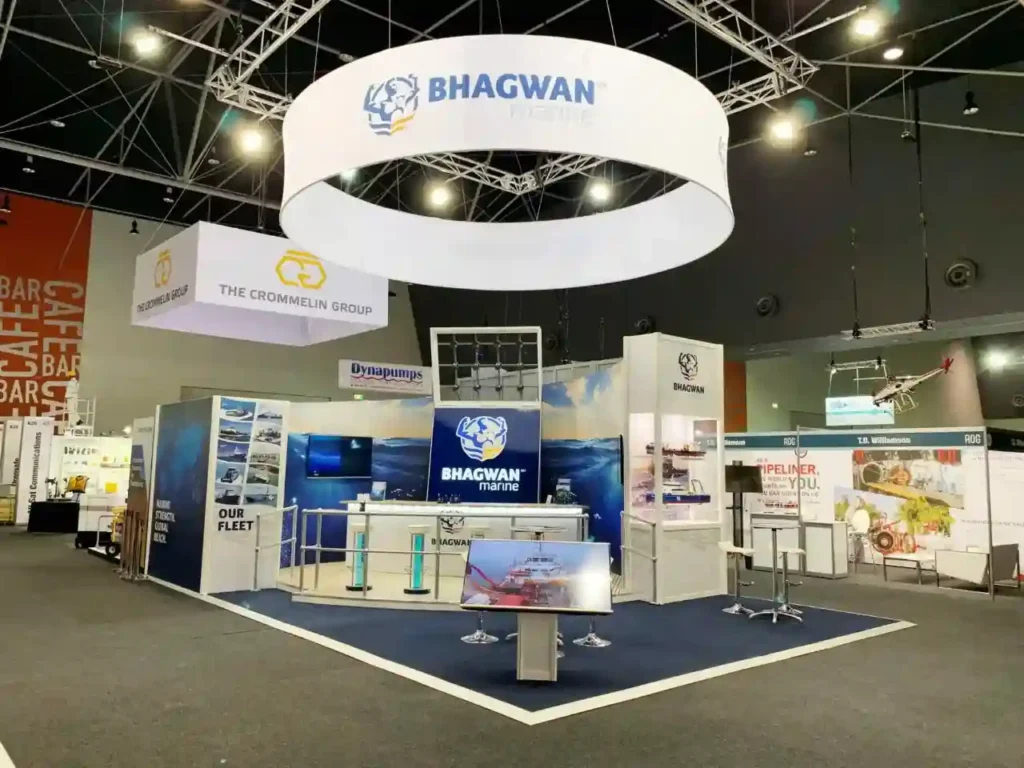
Lighting is a powerful, yet often underestimated, design element. It plays a huge role in how people perceive your stand. Even the best exhibition stand design can look flat without proper lighting.
Strategic lighting can highlight key products, create visual focus points, improve brand perception, and draw attention to your exhibition stand from across the expo hall. In Australian exhibition venues, lighting conditions can vary. That is why professional builders often combine natural lighting with LED solutions.
Warm lighting works well for hospitality or lifestyle brands, while bright white lighting is often used for tech or industrial displays. A well-lit booth in exhibition space stands out instantly from competitors who rely only on venue lighting.
5. Incorporate Interactive Features to Increase Engagement
Modern exhibition booth design is no longer static. Modern Trade Show Booth Design Ideas include interactive elements that are crucial for captivating visitors and encouraging them to spend more time at your stand. Interactive doesn’t have to mean complicated or expensive; simple yet effective solutions can make a big difference.
Interactive elements can include:
- Touchscreen displays
- Product demonstrations
- Virtual or augmented reality experiences
- Live presentations
- Social media engagement walls
These features encourage visitors to stay longer and interact more deeply with your brand.
For example, at the Bhagwan Marine stand designed for the 2019 AOG Exhibition by Barrett Exhibition Group, interactivity played a key role in its success. The stand featured high-quality video screens showcasing real operational footage of Bhagwan Marine crews in action across different environments.
6. Choose the Right Materials and Stand Construction
The materials used in your stand affect both appearance and practicality. A good exhibition stand design balances style, strength, and usability.
Balance Aesthetics and Durability: Select materials that are visually appealing and align with your brand image. Your stand should look premium but also withstand multiple events.
Consider Sustainability: Eco-friendly exhibition display stands not only reduce environmental impact but also improve brand image.
Ensure Easy Assembly and Transport: Choose a stand design that is relatively easy to assemble and dismantle, and convenient to transport. Modular exhibition stands are an excellent option, offering flexibility and ease of setup.
7. Partner with Experienced Exhibition Stand Builders
Designing and constructing an effective exhibition stand is a significant investment of both time and capital. Even the best ideas can fail if they are not executed properly. Working with experienced professionals ensures your vision becomes a practical and effective structure.
Partnering with experienced exhibition stand builders, like Barrett Exhibition Group, can be the difference between a stressful event and a seamless success. With over 65 years of experience in Perth, we’ve seen the industry evolve and understand the specific requirements of Australian venues and exhibitors.
With in-house fabrication capabilities, we ensure that all custom stands are built to the highest standards of quality and durability. In addition, we also provide comprehensive custom signage services, ensuring your branding is consistent, visible, and impactful across all elements of your exhibition presence, from stand graphics to large-format displays and directional signage.
Common Exhibition Stand Design Mistakes to Avoid
Many exhibitors lose opportunities because of simple design mistakes. Being aware of these can help you steer clear of them:
- Cluttered Layouts: Overfilling your stand with too many products or promotional materials can overwhelm visitors and make your space feel uninviting. Prioritise quality over quantity.
- Poor Lighting: Insufficient or poorly directed lighting can make your stand appear dull and unappealing, even if your products are fantastic.
- Inconsistent Branding: A lack of uniformity in colours, logos, and messaging can confuse visitors and dilute your brand identity.
- Ignoring Visitor Flow: A poorly planned layout can create bottlenecks, deterring visitors from exploring your stand fully.
- Lack of Interactivity: In a dynamic exhibition environment, a static display can fail to capture attention and engage visitors effectively.
- Neglecting Pre-Show Prep: Skipping a dry run or failing to plan logistics can lead to last-minute stress and a less-than-perfect setup.
Conclusion
A successful exhibition stand design is a combination of strategy, creativity, and execution. It is not just about building something visually appealing, it is about creating an experience that attracts, engages, and converts visitors.
From planning your objectives to designing visitor flow, from using strong branding to adding interactive features, every detail matters. Whether you are developing a simple expo stand design or a large-scale exhibition booth design, the goal is to stand out in a crowded environment and create meaningful connections.
Partnering with professionals like Barrett Exhibition Group, with their deep understanding of the Australian exhibition landscape, provides the proven expertise needed to transform your exhibition presence into a powerful platform for growth.
Frequently Asked Questions
1. What makes an effective exhibition stand design?
An effective exhibition stand design is one that balances clear objectives, strong branding, and visitor engagement. It should attract attention quickly, communicate the brand message within seconds, and guide visitors naturally into engagement areas that support conversations and lead generation.
2. Should I choose custom or modular exhibition display stands?
Custom stands are ideal for creating a strong, unique brand presence at high-impact events, while modular stands are better for flexibility, reuse, and cost efficiency across multiple exhibitions. The choice between Modular vs Custom Exhibition Stands depends on whether your priority is maximum visual impact or long-term adaptability and budget efficiency.
3. What are the latest trends in exhibition booth design?
Modern exhibition booth design is increasingly focused on experience rather than static display. Current trends include:
- Interactive technology (touchscreens, AR/VR demos)
- Immersive storytelling using video walls and motion graphics
- Sustainable materials and reusable structures
- Open-plan layouts that encourage natural movement
- Experience zones (demo areas, meeting spaces, education hubs)
- Minimalist branding with strong visual hierarchy
4. How to Stand Out at a Large Exhibition?
Standing out in a crowded exhibition hall is less about size and more about attention, clarity, and engagement. Effective strategies include:
- Designing a stand that is visible from multiple angles
- Using bold but simple branding that can be read in seconds
- Creating a strong “hook” zone at the front to attract foot traffic
- Incorporating interactive elements (live demos, screens, or experiences)
- Training staff to actively engage rather than wait for visitors
Explore Our Other Blogs
Shell Scheme vs Space Only: Which Exhibition Stand Should You Choose?
Choosing between a shell scheme and a space only stand is one..

Experiential Marketing: How Brands Create Memorable Customer Experiences
The first step is getting your brand noticed. The next step is..
Exhibition Stand Regulations in Australia: What Every Exhibitor Needs to Know

10 Effective Lead Capture Strategies for Trade Shows and Exhibitions

AusIMM Strategic Mine Planning Conference 2026 in Perth
10 Questions to Ask Custom Stand Builders Before You Hire One
Contact Our Team
Turn your Perth exhibition ideas into unforgettable experiences with Barrett Exhibition Group!
Call us
Call our team to discuss any of our products or services
- 08 9244 2431
Visit us
Chat to us in person at our office
- 18 King Edward Rd, Osborne Park, WA, 6017