



Shell Scheme vs Space Only: Which Exhibition Stand Should You Choose?
- 5 min read
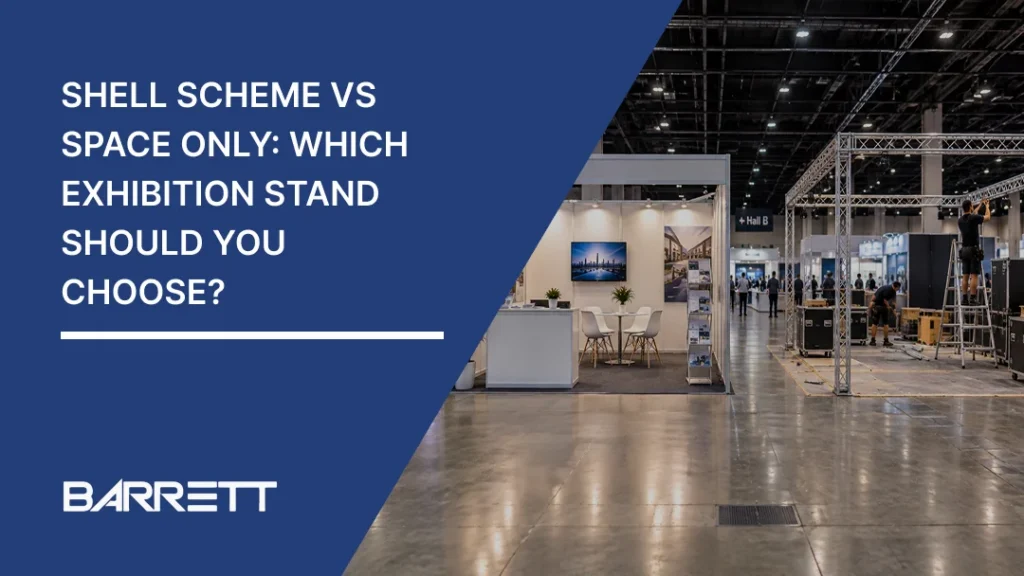
Choosing between a shell scheme and a space only stand is one of the first decisions you’ll make when booking an exhibition. A shell scheme is simple and convenient, while a space only stand gives you more freedom to create a stand that fits your brand. Choosing the wrong option can lead you to spending more than necessary or ending up with a stand that does not meet your exhibition goals.
The right choice depends on your budget, your stand size, and how much creative control you want. This guide explains the key differences between shell scheme and space only stands, so you can decide with confidence before you sign your exhibitor contract.
What Is a Shell Scheme Exhibition Stand?
A shell scheme exhibition stand is a pre-built stand system supplied by the exhibition organiser or the event’s main contractor. It gives you a defined exhibition space with a ready made structure. You then add your branding, product display, furniture, screens, posters, or shell scheme graphics.
It normally uses aluminium frames, wall panels, a fascia board, basic flooring, lighting, and a power point. Some exhibitor packages also include furniture, waste removal, or a printed company name.
NOTE: The exact package is not universal. Always check the exhibitor manual and booking agreement before assuming that power, carpet, lighting, furniture, or exhibition graphics are included.
Advantages of Shell Scheme
- Lower upfront cost: Walls, flooring, and lighting are already included in the stand package.
- Faster setup: There is little to no stand construction, so bump in is quick.
- Simple planning: You are not managing a stand builder, electrics, or rigging.
- Clear boundaries: The fixed structure makes it easy to see where your space starts and ends.
- Good for testing a market: Ideal if you’re exhibiting for the first time or trialling a new show.
A shell scheme is not automatically plain. A clear headline, large readable graphics, good lighting, and an open visitor path can outperform an expensive stand with a confusing layout.
Disadvantages of Shell Scheme
- Limited customisation: You cannot change the wall height, shape, or structure.
- Harder to stand out: Neighbouring stands often look the same, since everyone uses the same shell.
- Restricted branding space: Graphics are usually limited to the wall panels and fascia.
- Enclosed feel: Fixed walls on two or three sides can make the stand feel closed off to visitors.
What Is a Space Only (Raw Space) Exhibition Stand?
A space only or raw space exhibition stand is a marked area of floor with nothing on it. No walls, no carpet, no power, no lighting. You receive the footprint, and you or your stand contractor supplies and builds everything from the scratch.
This option is best suited to exhibitors who want a fully custom exhibition stand that reflects their brand exactly instead of adapting their business to a standard frame. Since there is no existing structure to work around, you can design your own meeting areas, storage rooms, raised platforms, and multi level displays.
Before committing, read the venue requirements carefully. Space-only projects may need scaled drawings, engineering documents, risk assessments, fire certificates, public liability insurance, and approval from the exhibition organiser.
Advantages of Space Only Stand
- Total design freedom. Build any shape, height, or layout that suits your brand.
- Stronger brand impact. The main benefits of custom stand design is that it helps you stand out from shell scheme neighbours.
- Flexible use of space. Add a meeting area, storage area, or product display exactly where you need it.
- Better for larger stands. Works well for island or peninsula positions where visitors approach from multiple sides.
Disadvantages of Space Only Stand
- Higher total cost. You pay for stand design, construction, flooring, power, and installation separately.
- Longer lead time. Custom builds typically need 8 to 12 weeks of design and fabrication.
- More coordination. You need a stand contractor to manage build, delivery, and dismantling.
- Venue compliance. You are responsible for meeting exhibition venue requirements, and follow the exhibition stand regulations including fire safety and structural approval.
Key Differences Between Shell Scheme and Space Only Stands
Feature | Shell Scheme | Space Only |
Structure | Standard frame and panels supplied by the organiser | Custom structure designed and supplied by the exhibitor or stand contractor |
Flooring | Basic flooring or carpet is usually included, depending on the package | Flooring is usually arranged separately |
Lighting & Power | Basic lighting and power may be included, depending on the package | Lighting and power are usually arranged separately |
Branding | Fascia branding with optional graphics and display elements | Fully customised branding integrated into the stand design |
Design Freedom | Limited to moderate | High, subject to venue and organiser requirements |
Stand Height | Usually follows the standard shell scheme height | Custom height may be possible, subject to venue restrictions |
Setup | Faster and simpler to set up | Requires coordinated design, construction and installation |
Budget | Easier to estimate and manage | More variables can affect the overall cost |
Best For | Smaller stands, simple displays and first-time exhibitors | Custom experiences, larger displays and high-impact campaigns |
Reuse | Graphics and accessories can often be reused | Greater potential for reuse, especially with modular designs |
How Stand Position Affects Your Exhibition Space
Different types of exhibition stand positions on the exhibition floor plan changes how visitors see and approach your stand. It also affects whether a shell scheme or space only stand makes more sense.
Inline or Row Position
An inline stand has one open side and neighbouring stands on both sides. It is usually the simplest and most affordable position. Use a strong back wall, a clear headline, and an open front. Avoid placing a table across the entrance because it can block visitor flow.
An inline shell scheme is often suitable for a small product range, lead capture campaign, or first exhibition. A space only row stand works well when you need a custom feature wall, product demonstration, or compact meeting area.
Corner Position
A corner stand has two open sides. It can attract visitors from two aisles and gives you more options for product display and entry points. Use both open faces in the exhibition stand design. Do not treat the second side as a blank edge.
Peninsula Position
A peninsula stand has three open sides and can support a more open layout. It is useful for demonstrations, hospitality, or several product categories. Plan storage carefully because there are fewer enclosed walls to hide boxes and equipment.
Island Position
An island stand is open on four sides. It has the greatest visitor access and strong visibility across the exhibition hall, but it normally needs a more complete design because every side is visible. Space only is the natural choice for a large island experience. A shell scheme island may be available at some events, but the package and height rules must be confirmed.
What's Included in a Shell Scheme vs Space Only Stand?
Item | Shell Scheme | Space Only |
Floor Area | Included as part of the booked stand space | Included as a marked floor space |
Wall Structure | Standard walling and frame are usually included | Structure must be designed and built separately |
Fascia | Usually included with basic stand identification | Custom signage and fascia are arranged separately |
Carpet / Flooring | Often included, depending on the package | Usually arranged separately |
Power | Basic power supply may be included, depending on the package | Required power is usually ordered separately |
Lighting | Basic lighting may be included | Lighting is designed and arranged separately |
Furniture | May be included or available as an optional extra | Usually hired or supplied separately |
Graphics | Usually added as an optional branding element | Typically integrated into the custom stand design |
Installation | Standard structure is generally installed by the organiser or appointed contractor | Installation is coordinated with your stand contractor |
Approvals | Usually follows the organiser’s standard package process | Stand plans and additional compliance documents may be required |
Which Stand Should You Choose?
Choose shell scheme if:
- This is your first or second trade show.
- You have a small stand size and a focused offer.
- Your budget or preparation time is limited.
- You mainly need branded panels, a counter, brochures, and lead capture.
- You do not need large products, private meetings, or a complex demonstration.
Choose space only if:
- The event is strategically important to your sales or brand plan.
- You need a custom exhibition stand to express your identity.
- You need product display zones, meeting areas, storage, or hospitality.
- Your plot is a corner, peninsula, or island position.
- You attend several exhibitions and can reuse a modular stand system.
- You have enough lead time for design, approval, build, logistics, and installation.
Comparing the Costs of Shell Scheme and Space Only
| Cost factor | Shell Scheme | Space Only |
| Stand space | Included in the package or charged as part of the booking | Usually charged separately by m² |
| Structure | Usually included | Custom build cost applies |
| Branding | Additional graphics may be required | Usually integrated into the stand design |
| Lighting & power | Basic supply may be included | Usually arranged separately |
| Furniture | May be included or hired separately | Usually hired or supplied separately |
| Installation | Generally simpler | Requires professional construction and installation |
| Overall budget | Lower and easier to predict | Higher and more variable |
Conclusion
Shell scheme is the practical choice for a simple, faster, and budget controlled exhibition presence, while space only is better for businesses that need custom branding, greater design freedom, larger product displays, or a reusable exhibition stand. Review the exhibitor package, floor plan, venue requirements, and total project cost before making your decision.
At Barrett Exhibition Group, we work with exhibitors across both options, from smart shell scheme upgrades to fully custom stands built for corner, peninsula, and island positions. Even if you go with a shell scheme, we can still supply signage, large format graphics, and furniture hire to lift your stand well beyond the standard package. Our team can walk you through the exhibitions and displays solutions that fit your budget and help you avoid the hidden costs that catch out first time exhibitors
Frequently Asked Questions (FAQs)
1. Is raw space and space only stand the same?
Yes. Raw space and space only refer to the same thing, an empty area of the exhibition floor with no walls, flooring, power, or lighting included. The terms are used interchangeably across the exhibition industry.
2. Is space only more expensive than a shell scheme?
Usually, yes. Space only costs more overall because you pay separately for stand design, construction, flooring, and power, on top of the floor space fee. A shell scheme bundles these basics into one package, making it the more cost effective option for smaller stands.
3. Which stand is better, raw space or shell scheme?
Neither is better in every case. Shell scheme is better for first time exhibitors, small stands, and tight budgets. Raw space is better for established brands wanting a custom exhibition stand, larger stands, and high visibility positions like peninsula or island.
4. Can a shell scheme stand be customised?
Yes, to a point. You can add branded graphics, furniture, lighting upgrades, and flooring overlays to a shell scheme. You cannot change the fixed wall structure or height, since that belongs to the exhibition organiser’s system.
Explore Our Other Blogs

Experiential Marketing: How Brands Create Memorable Customer Experiences
The first step is getting your brand noticed. The next step is..

Exhibition Stand Regulations in Australia: What Every Exhibitor Needs to Know

10 Effective Lead Capture Strategies for Trade Shows and Exhibitions

AusIMM Strategic Mine Planning Conference 2026 in Perth

10 Questions to Ask Custom Stand Builders Before You Hire One

Custom Retail Shop Fit-Out Solutions for Modern Retail Stores
Contact Our Team
Turn your Perth exhibition ideas into unforgettable experiences with Barrett Exhibition Group!
Call us
Call our team to discuss any of our products or services
- 08 9244 2431
Visit us
Chat to us in person at our office
- 18 King Edward Rd, Osborne Park, WA, 6017