



Modular Exhibition Stands: A Complete Guide for Exhibitors
- 5 min read
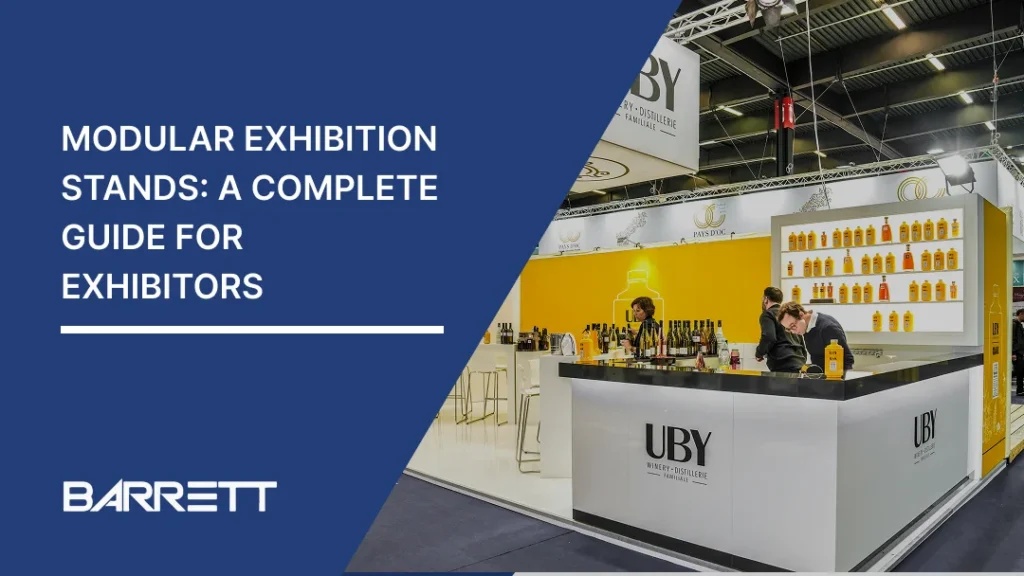
To have an effective exhibition stand, one must be able to capture people’s attention, have branding, and also adapt to changing requirements. However, constructing an entirely new exhibition stand every single time might be costly, time-consuming and complex.
That is where modular exhibition stands come in handy. They not only allow for customization but also allow one to use the same stands multiple times. This guide explains how modular exhibition stands work, their key benefits and components, how they compare with custom stands, what they cost and when they are the right choice for your business.
What Is a Modular Exhibition Stand?
A modular exhibition stand is a display structure that is constructed using modifiable units. Modules can be anything from frame sections, walls, graphics, counter spaces, shelving units, lighting, flooring, and meeting spaces. These modules are meant to be assembled, disassembled, packed up for transportation, stored and reused.
The framework is usually built using light weight aluminium materials. The surface of the structure could either be rigid panels, fabric or light up graphics. Some designs have modules that can be assembled without tools, while some require some level of assembly and professional skills.
Most modular booths have either of the two types of construction:
- Panel based systems: Rigid graphic panels click into an aluminium frame, giving a clean, wall like finish.
- Fabric based systems: Tension fabric graphics stretch over a lightweight frame, giving a softer, more contoured look.
Benefits of Modular Exhibition Stand
The appeal of a modular exhibition stand comes down to five practical advantages.
- Lower cost per show. You buy the frame and graphics once, then reuse them across multiple events. Only the graphics need updating for a new campaign.
- Reconfigurable for different spaces. The same components can form a small inline stand or expand into a larger corner or island stand as your exhibition space changes.
- Faster install and dismantle. Tool free connectors and pre-built panels mean shorter build times than a fully custom stand, which often means lower labour costs too.
- Consistent branding. Reusing the same structure and graphic style across shows builds visual recognition, so visitors recognise your brand before they read a single word.
- Better sustainability profile. Because the frame and hardware are reused rather than rebuilt, a modular stand produces far less waste over a multi-show calendar than a single-use build.
Key Components of a Modular Exhibition Stand
A modular exhibition stand is really a kit of parts. Understanding each one helps you brief a stand builder properly and avoid paying for features you don’t need.
Component | What it does |
Aluminium frame | The structural skeleton that holds the stand together and supports its shape |
Graphic panels or fabric graphics | Branded surfaces that carry your logo, messaging, and imagery |
Exhibition counter | A reception point for greeting visitors and holding brochures or a tablet |
Display shelving | Product display, literature holders, or merchandising space |
Exhibition lighting | Spotlights and backlighting that highlight graphics and products |
Storage | A lockable cupboard for bags, stock, and staff belongings, usually hidden from view |
AV equipment | Screens, tablets, or audio used for demos and visitor engagement |
Branded graphics | The printed or digital creative that turns the frame into a recognisable stand |
Not every stand needs all eight elements. A small inline booth might only need a frame, graphics, and a counter, while a larger island stand can carry lighting rigs, AV zones, and dedicated storage. It all depends on your requirement.
Modular Exhibition Stands VS Custom Exhibition Stands: Key Differences
Exhibitors often ask whether you want to go with a modular or custom exhibition stand. The honest answer is that it depends on how often you exhibit and how unique your design needs are.
Factor | Modular Exhibition Stand | Custom Exhibition Stand |
Reusability | Reusable and reconfigurable for years | Usually built for one specific layout |
Upfront cost | Lower to moderate | Higher, often several times more |
Cost per show | Drops with every reuse | Stays fixed or rises with rebuilds |
Design freedom | Good, within the modular system’s limits | Unlimited, fully bespoke |
Build time | Faster, often tool free | Longer, needs skilled trades on site |
Best for | Exhibitors attending 2 or more shows a year | One off flagship stands or unusual shapes |
If your brand needs a completely unique architectural statement for a single major show, a custom exhibition stand may be worth the extra cost. If you exhibit regularly and want a strong return on investment, modular wins on almost every measure except pure design freedom.
When Should You Choose a Modular Exhibition Stand?
A modular stand is a strong choice when:
- You attend two or more exhibitions or conferences each year.
- Your stand size changes from event to event.
- You want a consistent brand presence.
- You need a product area, meeting zone, storage, or screen.
- You want to update campaigns without replacing the whole stand.
- You can store and transport the components safely.
- You want to spread the investment over several events.
Choose modular if repeat use + layout flexibility + brand consistency matter more than a one-off, highly unusual structure. Include a portable display if the need is limited to a backdrop, banner, or small counter. Choose a custom build if the stand itself must deliver a unique architectural experience or support unusual structural loads.
When Is a Modular Stand Not the Right Choice?
Modular expo stands might not always be the right choice. Consider a fully custom build stand or a different type of exhibition stand instead when:
- The design requires an unusual height, shape, or suspended element.
- You need to support very heavy products or machinery.
- The floor space is very small and the system needs too much depth.
- You are about to complete a major rebrand.
- The event is a single occasion and the system has no future use.
- You have not allowed for transport, storage, graphics, power, and installation.
For tall or complex structures, ask the venue and contractor about engineering, fire safety, access, rigging, approval requirements and whether they follow the exhibition stand regulations. Temporary structures must be assessed for safety, including fire risks and escape routes.
How Much Does a Modular Exhibition Stand Cost?
Modular exhibition stand cost depends on stand size, the number of features, and whether you buy or hire.
Stand size | Typical inclusions | Approximate cost (AUD) |
Small inline (up to 9 sqm) | Frame, graphics, basic lighting, counter | $6,000 to $15,000 |
Medium corner or peninsula (10 to 24 sqm) | Frame, graphics, lighting, shelving, storage | $15,000 to $35,000 |
Large island stand (25 sqm+) | Full system, AV integration, custom-modular features | $35,000 and more |
Request an itemised quotation and compare the full event cost, not just the frame price. Hiring the stand can reduce the initial outlay for one event but buying may offer better control for a regular exhibition programme.
How to Plan a Successful Modular Exhibition Stand
A modular exhibition stand only delivers on its promise if it’s planned properly from the start.
Step 1: Set one main objective
Choose one primary outcome, such as qualified leads, demonstrations, meetings, or brand awareness. This decides how much space to give to graphics, seating, products, and staff activity.
Step 2: Study the exhibition space
Confirm the stand size, open sides, ceiling height, visitor routes, power points, delivery rules, and build times. A corner stand needs a different layout from a wall stand. Check the venue plan before approving artwork.
Step 3: Design for visitor flow
Keep the front open where possible to attract the visitors. Place the strongest message at eye level and make the next action obvious. Use separate zones for attraction, interaction, and conversion:
- Attraction: large brand message, product image, or backlit graphic.
- Interaction: demo counter, sample area, or screen.
- Conversion: meeting table, QR code, lead form, or booked appointment area.
Avoid filling every wall. Open space makes the stand easier to enter and reduces visual clutter.
Step 4: Write simple graphics
Use one main message, a short supporting line, and one clear call to action. Visitors often see a stand while walking past it, so small paragraphs and long lists will not work from a distance.
Step 5: Plan practical details
Build in hidden storage for bags, stock, literature, and cleaning items. Plan power and cable routes before placing furniture. Keep screens from blocking graphics or conversations, and leave room for staff to move.
Step 6: Prepare the team
A good exhibition stand cannot fix an unprepared team. Brief staff on the target visitor, opening questions, product proof points, lead scoring, and follow-up time. Keep the stand staffed, tidy, and welcoming throughout the event.
Step 7: Review after the show
Record qualified leads, meetings, setup time, and transport issues. Use the results to improve the next configuration.
Make Your Next Exhibition Stand Work Harder
A well-planned modular exhibition stand can give your business the flexibility to create a professional presence across different events while keeping your display practical, reusable and cost-effective.
If you’re planning a modular stand for your next exhibition, Barrett Exhibition Group can help turn your requirements into a professional exhibition space. From custom exhibition stands and exhibition booths to exhibition signage, Barrett provides solutions designed around your brand, space and exhibition goals.
Frequently Asked Questions (FAQs)
1. Are modular exhibition stands reusable?
Yes. Modular exhibition stands are built to be reused across multiple shows. The aluminium frame and hardware typically last for years, while only the graphic panels need updating for a new campaign or product launch.
2. Can modular exhibition stands be customised?
Yes. While the underlying frame follows a modular system, the graphics, layout, counters, shelving, and lighting can all be customised to match your brand. This is often called a custom-modular exhibition stand.
3. Is it better to buy or hire a modular exhibition stand?
Hiring suits exhibitors attending one or two shows a year, since it lowers upfront cost and often includes storage. Buying suits exhibitors attending three or more shows annually, since the cost per use drops with every reuse.
4. How long does it take to set up a modular exhibition stand?
Yes. This is one of the main advantages of a modular display system. The same frame components can be reconfigured into a small inline stand, a corner stand, or a larger island stand, depending on the exhibition space available.
5. Can modular exhibition stands be used for different stand sizes?
Yes. This is one of the main advantages of a modular display system. The same frame components can be reconfigured into a small inline stand, a corner stand, or a larger island stand, depending on the exhibition space available.
Explore Our Other Blogs

Illuminated vs Non-Illuminated Signs: Which Is Best for Your Business?
Your business signage can attract attention or go unnoticed, depending on how..
Effective Retail Signage Design Tips for Maximum Customer Impact
Effective retail signage gets the right message in front of the right..
Shop Front Signs in Perth: Types and Design Ideas for Your Business
A shop front sign is often the first thing a customer notices..
Reusable Exhibition Stands: How to Reuse Your Stand Across Multiple Events
A new exhibition stand for every event can quickly increase your marketing..

8 Signs It’s Time To Update Your Business Signage
Business signage is not a “set and forget” asset. It is often..

10 Cost-Effective Exhibiting Tips to Reduce Exhibition Costs
Exhibitions can generate strong leads and valuable brand exposure, but costs can..
Contact Our Team
Turn your Perth exhibition ideas into unforgettable experiences with Barrett Exhibition Group!
Call us
Call our team to discuss any of our products or services
- 08 9244 2431
Visit us
Chat to us in person at our office
- 18 King Edward Rd, Osborne Park, WA, 6017