



Custom Exhibition Displays: A Complete Guide for Exhibitors
- 5 min read
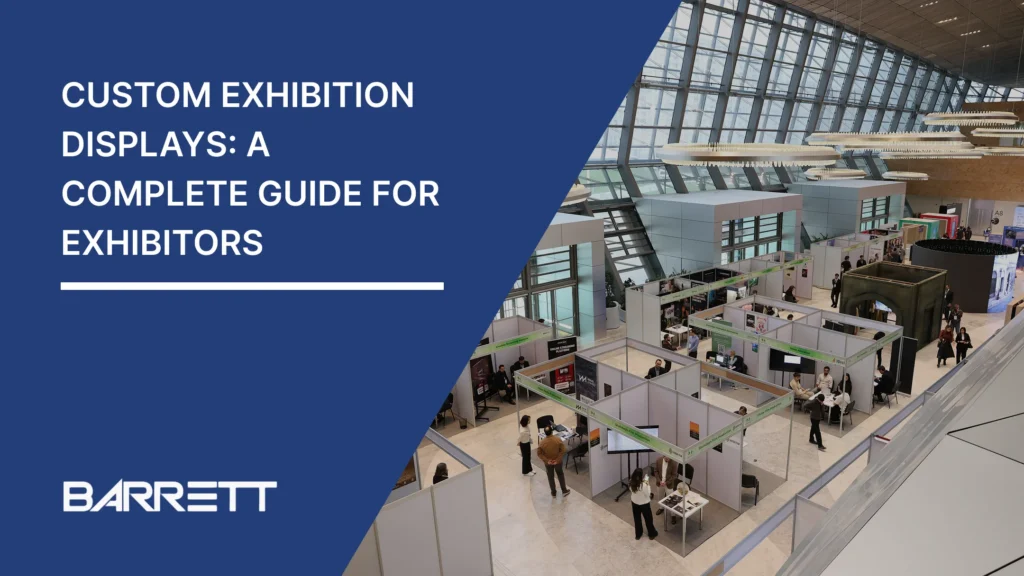
Your exhibition display is the very first thing that people will notice about your company at an event. In an environment where there are many competing businesses, a badly designed display may make a good product difficult to notice. The proper selection of the exhibition display is going to help your brand to become noticeable, attractive, and memorable.
But with such a variety of exhibition displays on the market, how can you decide what type is best for your business? This guide will help you get to know more about the different types of custom exhibition displays, their benefits, and how to choose the best one for your brand and needs.
What Are Custom Exhibition Displays?
A custom exhibition display is a structure or graphic design which helps a business to showcase its brand, products and services through an exhibition. The display can include graphics, product units, lights, screens, counters and storage facilities. A useful display attracts the right visitors, tells the visitors about what you offer, and leads to the next step, such as a conversation or demonstration.
What Are the Benefits of Custom Exhibition Displays?
A custom display will help you to make yourself distinct on the crowded floor and to create an effective sales area. Advantages include:
- Build brand recognition: Consistent colours, logos, graphics and finishes make your business easier to identify across a busy venue.
- Use the floor space well: The layout allows you to use space for visitor flow, product showcasing, movements of your staff and private meetings.
- Show products clearly: You will be able to have shelves, plinths, safe cabinets and demonstration counters that would match the nature of the products.
- Support engagement: Displays screens, interactive elements and demonstrations would allow visitors to engage.
- Create a practical working area: Storage space, power sockets, chairs and lead-capture points will allow your staff to work effectively.
- Plan for more than one event: Reusable structures and replaceable graphics can extend the value of the initial investment.
Types of Custom Exhibition Displays
Display Type | Best Suited For | Key Consideration |
Bespoke Exhibition Stand | Creating a distinctive brand experience or showcasing products in a custom-designed space | Allow sufficient time for design, fabrication, and installation. |
Portable or Pop-Up Display | Smaller events, compact spaces, and businesses that need quick setup and easy transport | Consider display size, portability, and the amount of branding or product information you need to show. |
Modular Exhibition Display System | Businesses attending multiple events with different booth sizes or layouts | Plan for flexible configurations, interchangeable components, and storage between events. |
Product or Demonstration Display | Showcasing products, offering demonstrations, or allowing visitors to interact with products | Ensure adequate space, safe operation, power access where needed, and easy visitor access. |
Display Panels and Backdrops | Presenting brand messaging, promotional graphics, artwork, or key information | Use clear, legible graphics that visitors can read from the expected viewing distance. |
Custom/Bespoke Exhibition Stands
A custom exhibition stand is designed for a specific brand, brief and venue. It can include multi-level structures, meeting rooms, hanging signs, AV screens and interactive zones. It gives the most design freedom and the strongest visual impact.
Portable and Pop-Up Displays
Pop-up displays fold or stretch into a frame, then pack into a carry case making it a convenient portable display for multiple use. It includes pull-up banners, folding frames, fabric backdrops and lightweight counters. They suit small spaces, roadshows and exhibitors who travel often.
Modular Exhibition Display Systems
Modular displays use repeatable frames, panels, counters or lighting that can be rearranged for different booth sizes. One set of parts can form a 3 by 3 metre booth at one show and a 6 by 3 metre booth at the next. Plan likely layouts in advance, including which graphics change and how parts will be labelled and stored. Comparing modular and custom exhibition stands will help to understand the trade-offs.
Product and Demonstration Displays
These units are built to show a product well. It may use shelves, plinths, showcases or counters, tablet stands and working demo stations. They work best when the product itself is the main selling point of the business. Always keep products visible without blocking movement and make the next action clear.
Exhibition display panels and backdrops
Display panels and branded backdrops create a clean visual wall behind your team and communicate key messages as stand-alone elements or parts of a larger system. They are light, cost less than a full build and suit information-led exhibitions. Use a clear headline, keep paragraphs short, and avoid low-contrast text that is difficult to read from the aisle.
What Can Be Customised in an Exhibition Display?
Almost every part of a display can be tailored. Use this as a checklist when you brief your builder.
Structure, Size and Layout
- Match dimensions to the allocated space and event rules.
- Confirm booth type, open sides, height limits, access and service restrictions.
- Map visitor movement, keep entrances clear and include staff, meeting, product and storage areas in the plan.
Branding, graphics and visual design
- Use brand colours, logo and imagery that matches with the brand identity.
- Include one headline message that works from a distance and visitors can understand quickly.
- Check artwork from both aisle and close range. Keep key text away from seams, doors and furniture.
- Use branded flooring, such as printable vinyl or show carpet.
Materials and finishes
- Common materials include timber-based boards, metal, acrylic, fabric and printed panels.
- Choose materials based on weight, finish, product load, transport and how often the display will be reused.
- Ask about cleaning, repair, packing and replaceable graphics.
Lighting, screens and interactive features
- Lighting can highlight products, while screens and interactive features can show content or invite visitors to take part.
- Confirm power, cable routes, viewing position and backup content.
- Use spotlights and backlit panels to guide attention
- Use LED and digital signage for live content and Audio visual hire for presentations.
Where Are Custom Exhibition Displays Used?
Trade Shows and Industry Exhibitions
Custom displays are used at trade shows, exhibitions and expo to present products, meet buyers and generate leads. At an industry expo, a custom display separates you from dozens of similar exhibitors.
Conferences and Corporate Events
At conferences, space is often small. Compact custom units, branded backdrops and tidy counters let you look professional without a large footprint. Making the most of a small exhibition stand requires careful layout planning to maximise branding, functionality, and visitor access.
Product Launches and Promotional Events
Product launches and promotional events need visual drama and fast setup. It can support brand activation ideas through demonstration counters, sampling points, and interactive features that encourage visitor engagement and create a clear focal point for the brand.
Retail and Public Exhibitions
Custom displays also work in shopping centres, museums, schools and outdoor events. Weather, crowds and handling matter more here, so durability becomes a priority. The event purpose changes the design: a lead-generation stand needs clear staff access and a conversation point, while a public display may need stronger visitor guidance and robust finishes.
Custom Exhibition Displays vs Portable Display Stands
Custom displays are designed for one brand and one space. Portable stands are standard systems you can set up quickly and reuse. Neither is always better.
Factor | Custom Exhibition Display | Portable Exhibition Display |
Design Flexibility | Highly customisable to match brand identity, exhibition space, and specific requirements | Usually limited to predefined sizes, formats, and configurations |
Setup and Installation | May require professional installation and a dedicated setup crew | Generally easier to assemble and can often be set up by a small team |
Visual Impact | Can create an immersive, fully branded exhibition environment | Ideal for compact displays and supplementary branding |
Reusability | Can be designed for reuse, reconfiguration, and adaptation to different events | Easy to reuse, but flexibility depends on the display system |
Planning Requirements | Requires more detailed design, fabrication, and venue coordination | Usually involves simpler preparation, although transport and setup still need planning |
A simple rule: Choose custom when impact and space use matter most. Choose portable when speed and cost matter most. Many exhibitors combine both, using a modular core with custom features added.
How to Choose the Right Custom Exhibition Display
Define Your Exhibition Objectives
Start with the result you want. Is it lead generation, brand awareness, product launches or sales meetings? Choose one primary measure of success. A lead-focused stand needs open fronts and capture points. A meeting-focused stand needs quiet seating.
Understand Your Audience and Products
Consider who will visit, what they need to know and how they should interact with your product. Large machinery may need photos, models and screens. Small products may need lit showcases and hands-on demo stations. Match the display to the visitor journey.
Check the Available Space and Venue Requirements
Confirm booth size, height limits, power access, flooring rules and bump-in times with the organiser before finalising the design. Australian exhibition venues may also have specific safety and structural requirements, so understanding exhibition stand regulations in Australia early can help you avoid design changes and installation delays.
Set a Realistic Budget
Costs vary widely by size, materials and features, so ask for itemised quotes. These are the main cost drivers:
Cost driver | Effect on price |
Size and height | Larger and taller builds cost more |
Materials and finishes | Premium materials raise cost, but last longer |
Lighting, AV and interactive features | Add equipment and install time |
Graphics | More print area and changes add cost |
Freight and installation | Distance, venue rules and timing matter |
Storage and reuse | Adds a small ongoing cost, lowers cost per event |
Consider Transport, Installation and Future Use
Ask how the display will be packed, shipped, assembled and stored. Parts should be easy to label, move and rebuild. Designing for reuse from day one lowers long-term cost. Proper transport and storage and choosing a reusable exhibition stand can make future exhibitions easier to manage.
Mistakes to Avoid When Choosing a Custom Exhibition Display
- Starting design before confirming the booth plan and venue rules.
- Filling every wall with text, leaving no clear main message.
- Choosing features for appearance without checking their purpose or cost.
- Forgetting storage, power, cable routes, freight and pack-down.
- Treating reuse as automatic without planning modular parts, repairs and graphic updates.
- Leaving artwork approval and production too close to the event.
- Failing to brief the staff who will welcome visitors and use the display.
Conclusion
The right custom exhibition display brings your brand to life, showcases your products effectively, and creates a better experience for visitors. By considering your exhibition goals, available space, budget, and future use, you can choose a display that balances visual impact with practical requirements. Planning for installation, transport, and storage from the beginning also helps make future events easier to manage.
For businesses planning their next exhibition, Barrett Exhibition Group brings experience in exhibition design, fabrication, and installation, with a team that has been delivering exhibition solutions since 1955. From initial concepts to on-site installation, Barrett supports projects of different sizes across Perth and Australia. Its custom exhibition stand services help businesses create displays suited to their brand, space, and event requirements.
Frequently Asked Questions (FAQs)
1. How much do custom exhibition displays cost?
The cost depends on size, materials, lighting, graphics, freight and installation. A portable display costs far less than a multi-level bespoke stand. Ask for an itemised quote and compare cost per event, not just the upfront price.
2. How long does it take to design and build a custom exhibition display?
Simple displays can take a few weeks. Large custom stands often need two to three months or more, including design approval, fabrication and freight. Timing varies by project, so brief your builder as early as possible.
3. Can custom exhibition displays be reused at multiple events?
Yes. Modular and well-built stands are designed for reuse. You can reconfigure parts for new booth sizes and reprint graphics to refresh the look. Storage of reusable components makes future events simpler.
4. What materials are best for custom exhibition displays?
There is no single best material. Timber and ply suit structural parts, powder-coated metal suits load-bearing frames, acrylic suits product showcases and fabric suits light, large graphics. Choose based on use, weight and how often you will move the display.
5. Should I buy or hire a custom exhibition display?
Buy if you exhibit often and want a branded asset you can reuse. Hire if you exhibit rarely or need a different look each time. Many exhibitors buy a core system and hire extras such as furniture or screens.
Explore Our Other Blogs
Exhibition Stand Transport, Storage and Logistics: A Practical Guide
Getting an exhibition stand to the venue is only one part of..
Illuminated vs Non-Illuminated Signs: Which Is Best for Your Business?
Your business signage can attract attention or go unnoticed, depending on how..
Effective Retail Signage Design Tips for Maximum Customer Impact
Effective retail signage gets the right message in front of the right..
Shop Front Signs in Perth: Types and Design Ideas for Your Business
A shop front sign is often the first thing a customer notices..
Reusable Exhibition Stands: How to Reuse Your Stand Across Multiple Events
A new exhibition stand for every event can quickly increase your marketing..
8 Signs It’s Time To Update Your Business Signage
Business signage is not a “set and forget” asset. It is often..
Contact Our Team
Turn your Perth exhibition ideas into unforgettable experiences with Barrett Exhibition Group!
Call us
Call our team to discuss any of our products or services
- 08 9244 2431
Visit us
Chat to us in person at our office
- 18 King Edward Rd, Osborne Park, WA, 6017